
Why Does My Stainless Steel Pan Turn Brown? (2026 Cookware Care Guide)
Brown discoloration on stainless steel pans is extremely common — and completely normal. It doesn’t mean the pan is ruined, unsafe, or low‑quality. In fact, it’s a natural result of heat, oils, minerals, and cooking chemistry. This guide explains why it happens, how to remove it, and how to prevent it long‑term.
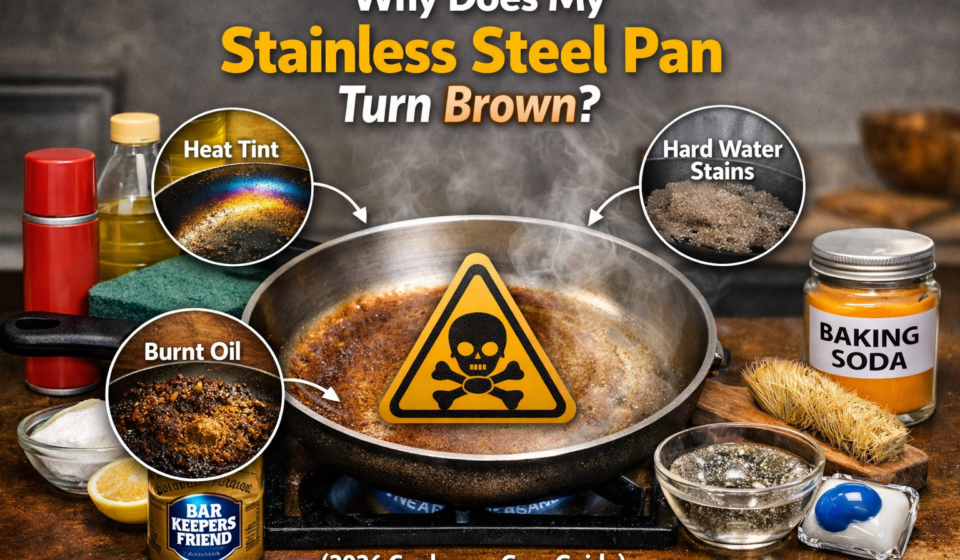
1. Heat Tint: The #1 Cause of Brown Stains
Stainless steel forms a thin oxide layer when exposed to high heat.
This layer can shift colors depending on temperature:
- Light gold → 350–400°F
- Brown → 400–500°F
- Blue/purple → 500–600°F
Why it happens:
Chromium in the steel reacts with oxygen, creating a harmless oxide film.
Is it dangerous?
No — it’s purely cosmetic and doesn’t affect performance.
How to remove it:
- Bar Keepers Friend + soft sponge
- Rinse and dry thoroughly
2. Burnt Oil Polymerization
When oils exceed their smoke point, they break down and form a sticky brown film.
Common culprits:
- Olive oil
- Butter
- Cooking sprays
- Marinades with sugar
Why it sticks:
Stainless steel has microscopic pores that trap burnt oil.
How to remove it:
- Make a paste of BKF + water
- Scrub in circular motions
- For heavy buildup: simmer water + baking soda, then scrub
3. Hard Water Mineral Deposits
If your water contains calcium or magnesium, it can leave brown or tan spots.
Signs it’s mineral buildup:
- Speckled brown dots
- Rough texture
- Appears after boiling water or steaming
Fix:
- Fill pan with 1 cup vinegar + 1 cup water
- Simmer 5 minutes
- Rinse and polish
4. Sugar or Starch Caramelization
Foods like onions, potatoes, rice, and sauces can leave caramelized brown residue.
Why it happens:
Sugars caramelize at 320°F, sticking to the steel surface.
Fix:
- Deglaze with water while pan is hot
- Scrape with a wooden spatula
- Polish with BKF afterward
5. Overheating an Empty Pan
Stainless steel heats extremely fast.
If you preheat it empty for too long, it can discolor within minutes.
Signs of overheating:
- Brown rings
- Rainbow tint
- Dark brown patches
Fix:
- Polish with BKF
- For severe cases: repeat 2–3 cycles
6. Dishwasher Detergent Reaction
Harsh detergents + high heat can cause brown or gold discoloration.
Why:
Dishwasher detergents contain:
- Chlorides
- Bleaching agents
- Abrasive particles
These can react with stainless steel’s surface.
Fix:
Hand‑wash only for best results.
How to Prevent Brown Discoloration
✔ Use medium heat
Stainless steel performs best at medium, not high.
✔ Preheat with oil, not empty
Add oil once the pan is warm — not blazing hot.
✔ Avoid cooking sprays
They leave polymerized residue.
✔ Clean immediately after cooking
Deglaze while the pan is still warm.
✔ Use the right cleaners
BKF, vinegar, and baking soda are your best tools.
Best Cleaning Methods (Ranked)
| Method | Best For | Effectiveness | Notes |
|---|---|---|---|
| Bar Keepers Friend | Heat tint, brown stains | ⭐⭐⭐⭐⭐ | Most reliable |
| Vinegar + Water Simmer | Mineral deposits | ⭐⭐⭐⭐ | Gentle & safe |
| Baking Soda Paste | Burnt oil | ⭐⭐⭐ | Mild abrasive |
| Stainless Steel Cleaner | Polishing | ⭐⭐⭐ | Cosmetic only |
| Dishwasher | None | ⭐ | Causes discoloration |
When Brown Stains Are Permanent
Some discoloration becomes part of the steel’s patina — especially after years of high‑heat cooking.
This is normal and doesn’t affect:
- Safety
- Nonstick performance
- Heat distribution
- Durability
A little patina is a sign of a well‑used, well‑seasoned stainless steel pan.
Final Thoughts
Brown discoloration on stainless steel pans is completely normal and easy to fix. Whether it’s heat tint, burnt oil, or mineral buildup, the solutions are simple and inexpensive. With proper care, your stainless steel cookware will last decades — and look great doing it.