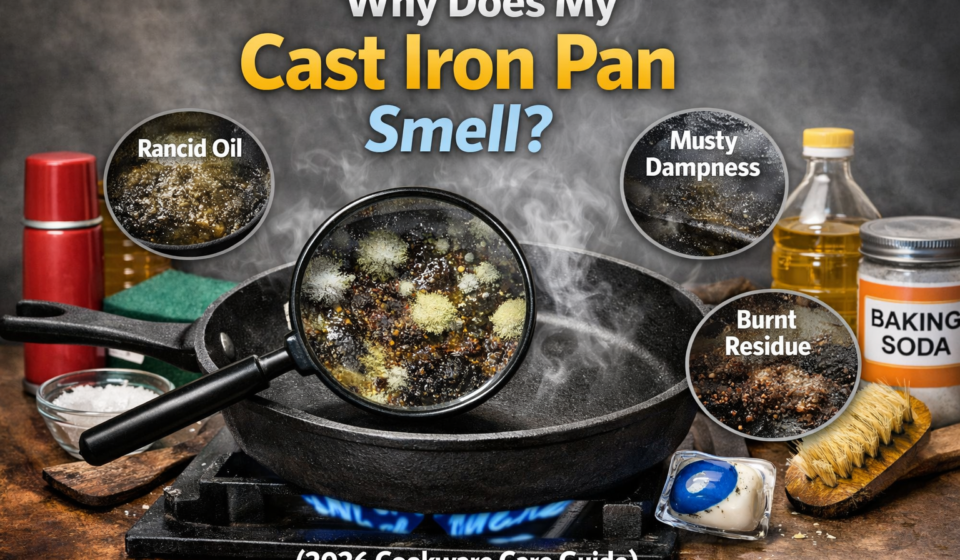

Why Does My Cast Iron Pan Smell? (2026 Cookware Care Guide)
A cast iron pan that smells — whether like metal, rancid oil, fish, onions, or something sour — is one of the most common issues cast‑iron owners face. The good news: the smell is almost always caused by seasoning chemistry, trapped oils, or residue, not by damage to the pan itself. This guide explains every cause, how to fix it, and how to prevent odors permanently.
1. Rancid Oil in the Seasoning Layer
This is the #1 cause of bad smells in cast iron.
Cast iron seasoning is made from polymerized oil.
If the oil layer is:
- applied too thick
- not fully baked
- made from low‑smoke‑point oils
- stored for long periods
…it can oxidize and turn rancid.
How to identify rancid seasoning
- Sour smell
- Old‑oil smell
- Sticky or tacky surface
- Uneven dark patches
Fix
- Heat pan to 400°F for 20 minutes to burn off surface oils
- If smell persists: strip and reseason (instructions below)
2. Food Odors Trapped in the Pores
Cast iron is porous.
Strong‑smelling foods can leave behind aromas that linger.
Common culprits:
- Fish
- Onions
- Garlic
- Curry
- Bacon grease
- Marinades
Fix
- Sprinkle coarse salt in the pan
- Scrub with a paper towel while warm
- Heat on stovetop until the smell disappears
Salt acts as a natural abrasive and deodorizer.
3. Soap Residue (Yes, It Can Happen)
Modern advice says soap is safe for cast iron — and it is —
but excess soap can get trapped in the seasoning layer.
Signs:
- Perfume‑like smell
- Chemical scent
- Soapy taste on food
Fix
- Rinse thoroughly with hot water
- Heat pan on stovetop for 5 minutes to evaporate residue
If the smell persists, the seasoning layer may need refreshing.
4. Moisture Trapped Under the Seasoning
If the pan wasn’t fully dried before oiling, moisture can get sealed under the seasoning layer.
Symptoms:
- Musty smell
- Damp, sour odor
- Slight rust spots
Fix
- Heat pan upside‑down in oven at 400°F for 30 minutes
- This drives out moisture and re‑hardens the seasoning
5. Improper Storage
Cast iron absorbs odors from its environment.
Storage mistakes:
- Storing with lid on (traps humidity)
- Storing near trash or compost
- Storing in a damp cabinet
- Stacking pans without airflow
Fix
- Store with lid off
- Place a paper towel inside to absorb moisture
- Keep in a dry, ventilated area
6. Burnt Food Carbonized Into the Seasoning
If food burns onto the surface, the carbonized layer can smell burnt every time the pan heats up.
Fix
- Simmer water in the pan for 5 minutes
- Scrape gently with a wooden spatula
- Dry and apply a thin layer of oil
If the burnt smell persists, a deeper cleaning may be needed.
7. When You Need to Strip and Reseason
If the smell is:
- rancid
- sour
- chemical
- persistent after cleaning
…it’s time to reset the seasoning.
How to strip the pan
- Coat pan with oven cleaner OR soak in lye bath
- Rinse thoroughly
- Scrub to bare metal
- Dry completely
- Apply a very thin layer of high‑smoke‑point oil
- Bake at 450°F for 1 hour
- Repeat 2–3 times
Your pan will smell like new.
Best Oils for Seasoning (Ranked)
| Oil | Smoke Point | Odor Risk | Notes |
|---|---|---|---|
| Flaxseed Oil | 450°F | Low | Hard, durable seasoning |
| Grapeseed Oil | 420°F | Low | Neutral, reliable |
| Avocado Oil | 520°F | Very Low | Great for high‑heat cooking |
| Canola Oil | 400°F | Medium | Works, but can go rancid |
| Olive Oil | 350°F | High | Not recommended for seasoning |
How to Prevent Cast Iron Odors Long‑Term
✔ Use thin layers of oil when seasoning
Thick layers trap smells.
✔ Avoid low‑smoke‑point oils
They oxidize faster.
✔ Clean immediately after cooking
Warm pans release residue more easily.
✔ Store with airflow
Never store with the lid on.
✔ Re‑season lightly every few months
Keeps the surface fresh and odor‑free.
Final Thoughts
A smelly cast iron pan isn’t ruined — it’s simply reacting to oils, moisture, or food residue. With proper cleaning, seasoning, and storage, you can eliminate odors completely and keep your cast iron performing beautifully for decades.