
The Best PFAS-Free Ceramic Cookware Sets for Induction Stoves
A quiet revolution is happening on the modern kitchen counter. For years, home cooks were forced to make a frustrating compromise when selecting high-performance cookware. If you wanted the effortless food release of a non-stick surface, you had to accept traditional coatings made from synthetic plastics like polytetrafluoroethylene (PTFE, commonly known as Teflon). Conversely, if you wanted to transition away from these chemical compounds toward a cleaner lifestyle, you had to struggle with the sticking hazards of raw stainless steel or the heavy maintenance routines of cast iron.
This culinary dilemma has been completely solved by two intersecting movements in home engineering: the rise of mineral-based ceramic non-stick coatings and the rapid adoption of induction cooking.
    [ HEALTHY LIVING ]                    [ THERMAL EFFICIENCY ]
    PFAS-Free Ceramic   <===============>   Induction Cooking
     (No Plastic Glaze)                    (Magnetic Precision)
Today’s home cooks are looking for kitchen solutions that protect their family’s health without sacrificing cooking efficiency. They want a chemical-free surface that can handle delicate eggs, but they also require structural compatibility with high-tech induction cooktops.
This comprehensive guide breaks down the science behind non-toxic ceramic engineering, explains the magnetic physics required for induction compatibility, and profiles the top-rated PFAS-free ceramic cookware sets on the market.
Deconstructing the Buzzwords: What is PFAS-Free Ceramic?
To understand why premium ceramic cookware is highly valued, it helps to understand the chemistry of traditional non-stick surfaces. Traditional non-stick coatings belong to a massive family of synthetic chemicals known as PFAS (per- and polyfluoroalkyl substances). This family includes PFOA, PFOS, PTFE, and thousands of other fluorinated compounds. Because these chemicals feature incredibly tight carbon-fluorine bonds that resist natural degradation, they are colloquially called “forever chemicals.”
+-------------------------------------------------------------------------+
|                  THE COATING MOLECULAR COMPARISON                       |
+-------------------------------------------------------------------------+
| TRADITIONAL PTFE COATING:                                               |
|   [ Carbon-Fluorine Matrix ] ===> Synthetic plastic glaze. Risk of      |
|                                   off-gassing if overheated past 500°F. |
|                                                                         |
| MODERN CERAMIC COATING:                                                 |
|   [ Silicon Dioxide Matrix ] ===> Natural sand derivative. Structurally |
|                                   incapable of releasing toxic fumes.   |
+-------------------------------------------------------------------------+
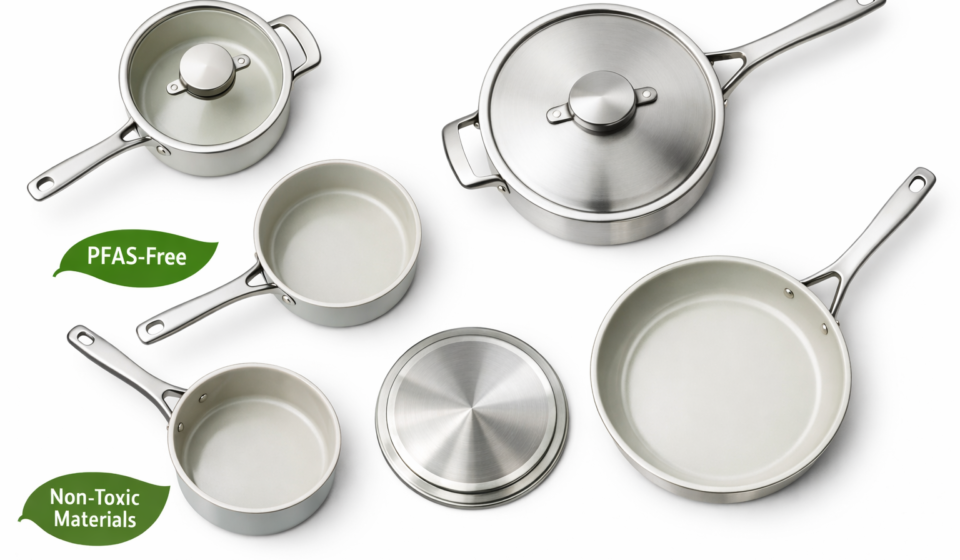
Modern ceramic cookware completely eliminates this chemical matrix. Despite the name, ceramic cookware is not made from solid clay like a coffee mug. Instead, it features a heavy metal base (usually aluminum or stainless steel) coated with a mineral-based glaze derived from natural silicon dioxide (quartz sand).
Using an advanced chemical engineering process called Sol-Gel technology, the natural silica is converted into a liquid spray, applied to the pan’s chassis, and baked in a high-temperature kiln. The result is a smooth, glass-like, vitrified surface that naturally releases food without relying on synthetic fluoropolymers. It is structurally incapable of off-gassing toxic fumes or leaching chemicals into your meals, even if you accidentally overheat the pan.
The Induction Challenge: Why Ceramic Needs Help
While ceramic coatings solve the non-toxic health equation, induction compatibility introduces a strict mechanical challenge.
Traditional gas and electric stoves heat cookware via thermal conduction—the burner gets physically hot and transfers that energy directly to whatever pan is resting on top of it. Induction cooktops operate on an entirely different physical principle: electromagnetism.
Beneath the ceramic glass surface of an induction cooktop sits a high-frequency copper electronic coil. When you turn on the burner, an alternating magnetic field passes through the glass. If you place a non-magnetic metal pan (like pure aluminum, copper, or standard ceramic-coated aluminum) onto the stove, absolutely nothing happens. The energy passes through the pan without creating heat.
+-----------------------------------------------------------------+
|                    INDUCTION INDUCTION MECHANICS                |
+-----------------------------------------------------------------+
| [ Alternating Magnetic Field ]                                  |
|               ||                                                |
|               \/                                                |
| [ Ferromagnetic Base Plate ] ===> Resists Current ===> Pure Heat|
+-----------------------------------------------------------------+
To generate heat on an induction stove, the cookware base must contain a magnetic material—specifically, a ferromagnetic metal like iron or magnetic stainless steel. The magnetic field excites the iron atoms in the pan’s base, creating electrical currents (eddy currents). The natural resistance of the metal converts this electrical energy directly into uniform thermal energy, heating the pan itself while leaving the surrounding glass cooktop cool to the touch.
To make an aluminum ceramic pan work on an induction stove, engineers must bond a heavy, magnetic stainless steel plate directly onto the bottom of the aluminum chassis. This multi-material composition gives you the rapid, even heat distribution of aluminum, the safe release of ceramic, and the high-tech precision of induction cooking.
The Top 4 PFAS-Free Ceramic Induction Cookware Sets
The following cookware collections represent the absolute pinnacle of healthy ceramic engineering, explicitly outfitted with heavy-duty ferromagnetic bases designed for flawless induction performance.
1. The Industry Gold Standard: GreenPan Venice Pro Evershine Ceramic Set
GreenPan is the original pioneer of ceramic non-stick technology, and their Venice Pro Evershine collection represents a premium, heavy-duty solution designed for serious home chefs.
+-----------------------------------------------------------------------+
|                    COOKWARE ARCHITECTURE MATRIX                       |
+-----------------------------------------------------------------------+
| FEATURE               | GREENPAN VENICE PRO     | CARAWAY CERAMIC     |
+-----------------------+-------------------------+---------------------+
| Body Composition      | Multi-Ply Clad          | Heavy-Gauge         |
|                       | Stainless Steel         | Aluminum            |
+-----------------------+-------------------------+---------------------+
| Base Type             | Full-Surface            | Bonded Magnetic     |
|                       | Magneto Induction       | Outer Disc          |
+-----------------------+-------------------------+---------------------+
| Exterior Finish       | Polished Stainless      | High-Design Matte   |
|                       | (Evershine Treatment)   | Colored Glaze       |
+-----------------------+-------------------------+---------------------+
The Architecture
Unlike standard ceramic pans that feature a lightweight aluminum body with a small steel disc slapped onto the bottom, the Venice Pro collection is built from multi-ply clad stainless steel integrated with GreenPan’s proprietary Magneto™ induction technology. Magnetic particles are spray-applied to the base and infused during a high-pressure forging process, ensuring the entire bottom surface remains flat and maximizes contact with the induction glass.
Induction and Non-Stick Performance
The interior is coated with Thermolon Advanced, a diamond-infused ceramic glaze. The addition of microscopic industrial diamonds makes the surface incredibly tough, allowing for excellent heat transfer and a high resistance to scratches. Because it features a heavy stainless steel body, it retains thermal energy beautifully, allowing for a deep, golden sear on proteins that lightweight ceramic pans cannot match.
-
Coating Safety: 100% free of PFAS, PFOA, lead, and cadmium.
-
Best For: Cooks who want the durability and searing capability of multi-ply stainless steel paired with premium ceramic convenience.
2. The Minimalist Design Icon: Caraway Ceramic Cookware Set
Caraway has taken the home design world by storm, blending highly curated contemporary aesthetics with intelligent, space-saving storage organization.
The Architecture
Caraway pans are constructed from a heavy-gauge aluminum core that delivers rapid, uniform heating across the pan’s floor. To achieve induction compatibility, a large, precision-engineered magnetic stainless steel plate is bonded securely to the exterior base.
Induction and Non-Stick Performance
Caraway’s mineral-based ceramic coating offers a remarkably slick surface right out of the box. Food glides across the pan with minimal butter or oil.
Where Caraway truly shines for apartment dwellers and modern homeowners is its included storage ecosystem. Every set ships with custom magnetic pan racks that store the vessels horizontally on their sides, alongside a canvas lid holder that mounts securely to the inside of your cabinet door. This layout prevents the pans from scratching each other in storage and keeps your cabinets highly organized.
-
Coating Safety: 100% non-toxic, free of all fluorinated polymers and heavy metals.
-
Best For: Design enthusiasts who want clean, modern aesthetics and built-in cabinet storage solutions.
3. The European Spatial Specialist: GreenPan Levels Stackable Ceramic Set
If space optimization is your absolute highest priority, but you still demand top-tier induction performance, the GreenPan Levels collection is an ingenious engineering solution.
The Architecture
The Levels collection is explicitly designed to nest cleanly inside itself, reducing its physical storage footprint by up to 55% compared to standard cookware sets. To prevent the hard metal bases from scratching the delicate ceramic interiors when stacked, the set features a specialized handle bracket design that keeps the bases suspended just millimeters above one another.
Induction and Non-Stick Performance
Outfitted with a hard-anodized aluminum body and a thick Magneto induction base, these pans are incredibly rugged and highly efficient on induction cooktops. The flat glass lids feature flush-folding handles that stack like dinner plates, freeing up massive amounts of vertical real estate in compact kitchen cabinets.
-
Coating Safety: Thermolon Diamond Advanced ceramic coating (PFAS-free).
-
Best For: Small apartments, urban kitchens, and cooks with limited cabinet space who use induction stoves.
4. The Value Innovator: Blue Diamond Triple Steel Ceramic Set
For home cooks looking to transition to non-toxic induction cooking without spending a massive amount of capital, the Blue Diamond Triple Steel line offers exceptional performance at a highly accessible price point.
The Architecture
This set utilizes a tri-ply construction method: an aluminum core is sandwiched completely between two layers of professional-grade stainless steel. The exterior steel layer is naturally ferromagnetic, providing native, highly efficient compatibility across all induction burners without requiring an added base disc.
Induction and Non-Stick Performance
The interior ceramic glaze is infused with signature blue diamond particles, which the manufacturer claims makes the coating 5 times harder than standard ceramic alternatives. On an induction cooktop, the tri-ply construction responds to temperature adjustments instantly, making it an excellent vehicle for mastering delicate sauces, reduction glazes, and perfectly cooked grains.
-
Coating Safety: Free of PFAS, PFOA, lead, and cadmium.
-
Best For: Budget-conscious home cooks who want the high-end response of tri-ply steel construction at an affordable price.
4 Rules for Preserving Ceramic Cookware on Induction Stoves
Premium ceramic induction cookware is an investment in your home’s health and efficiency. However, because ceramic is a mineral glaze rather than a synthetic plastic, it requires specific care to maintain its slick properties over time. Follow these four non-negotiable rules to ensure your set lasts for years:
Rule 1: Avoid the “Power Boost” Trap
Induction cooktops are famous for their speed, often featuring a “Power Boost” or “Turbo” setting that can boil water in under 90 seconds. While this setting is fantastic for thin stainless steel water kettles, never use it on a ceramic-coated pan.
Because induction transfers energy instantly, a Power Boost setting can subject the pan to thermal shock, causing the metal core to expand faster than the ceramic glaze can adjust. This can warp the pan and cause microscopic cracking in the ceramic finish, destroying its non-stick properties. Stick to medium or medium-high settings for preheating and cooking.
+-----------------------------------------------------------------+
|                  THE PREHEAT TEMPERATURE LIMIT                  |
+-----------------------------------------------------------------+
| AVOID: "Power Boost" Setting ===> Causes thermal shock & warping|
|                                                                 |
| RECOMMENDED: Medium Power Dial ===> Safe, uniform energy saturation|
+-----------------------------------------------------------------+
Rule 2: Say No to Aerosol Cooking Sprays
It is tempting to grab a convenient can of aerosol cooking spray when preparing a quick meal. However, aerosol sprays contain synthetic propellants (like butane or propane) and emulsifiers (like soy lecithin). Under heat, these chemical agents break down and form a sticky, microscopic residue that bakes directly into the pores of the ceramic coating.
This residue cannot be washed away with normal dish soap, creating a layer that food will stick to. Instead, use a refillable oil mister, or pour a teaspoon of raw olive oil, avocado oil, or butter directly into the pan.
Rule 3: Use Wood, Silicone, or Plastic Utensils
Many modern ceramic brands claim their diamond-infused coatings are safe for metal utensils. While a single accidental swipe with a metal fork won’t instantly ruin the pan, consistent use of sharp metal turners, whisks, and tongs will create microscopic abrasions on the glassy finish over time.
Once the surface is scratched, food particles can trap themselves inside the grooves, leading to progressive sticking. Protect your investment by using soft silicone, nylon, or natural wood utensils.
Rule 4: Let the Pan Cool Completely Before Washing
When you finish cooking a meal, never take a smoking hot pan and plunge it directly into a sink full of cold water. This sudden temperature drop triggers severe thermal shock.
Because aluminum, stainless steel, and ceramic glaze contract at entirely different physical rates when chilled rapidly, cold water can cause the coating to delaminate or separate from the metal base. Allow your pans to cool naturally on the stove for ten minutes before washing them with warm water, mild liquid dish soap, and a soft yellow sponge.
Summary: A Clean Path Forward
Switching to a premium, PFAS-free ceramic cookware set designed for induction cooking is one of the smartest upgrades you can make for your modern kitchen. It merges the absolute peak of healthy, material safety with the energy efficiency and precise temperature control of magnetic cooking.
+-------------------------------------------------------------------------+
|                    THE CERAMIC INDUCTION BLUEPRINT                      |
+-------------------------------------------------------------------------+
|  THE SAFE COATING:                                                      |
|  [ Mineral Sol-Gel Silica ] ---> 100% Free of PFAS & Forever Chemicals  |
|                                                                         |
|  THE POWER BASE:                                                        |
|  [ Ferromagnetic Steel Plate ] ---> Complete Magnetic Induction Utility  |
+-------------------------------------------------------------------------+
By prioritizing sets featuring heavy-gauge multi-ply bodies or integrated induction bases—and practicing smart kitchen habits like avoiding hyper-intense preheats and aerosol sprays—you can enjoy a streamlined, safe, and incredibly rewarding cooking experience for decades to come. Turn on your induction burner, let your ingredients slide across a clean surface, and cook with absolute peace of mind!