Why Do Stainless Steel Pans Turn Rainbow Colors? (2026 Cookware Science Guide)

Why Do Stainless Steel Pans Turn Rainbow Colors? (2026 Cookware Science Guide)
A complete breakdown of heat tint, oxidation, mineral deposits, and how to remove rainbow discoloration without damaging your pan
If you’ve ever heated a stainless steel pan and noticed a rainbow‑colored sheen — blue, purple, gold, or iridescent streaks — you’re not alone. This “rainbow effect” is one of the most common questions home cooks ask about stainless steel cookware. The good news: it’s completely harmless, totally normal, and easy to remove.
This guide explains why stainless steel changes color, what causes rainbow discoloration, how to fix it, and how to prevent it from happening again.
1. What Causes Rainbow Colors on Stainless Steel?
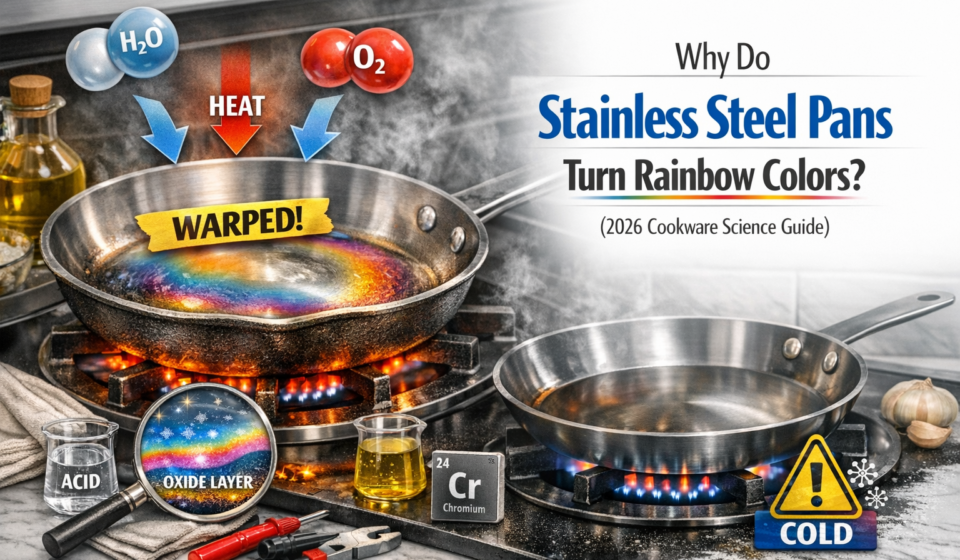
The rainbow effect is caused by heat tint, a thin layer of oxidation that forms when stainless steel is exposed to high heat.
Why it happens
- Stainless steel contains chromium, which reacts with oxygen
- When heated, chromium forms a thin oxide layer
- Light refracts through this layer
- Different thicknesses create different colors
This is the same phenomenon seen on titanium, exhaust pipes, and metal tools exposed to heat.
Key point:
Rainbow discoloration is not damage — it’s a natural reaction to heat.
2. What Colors Mean (Temperature Indicators)
The color of the tint often reflects the temperature the pan reached.
| Color | Approx. Temperature | Meaning |
|---|---|---|
| Light gold | 350–400°F | Normal cooking heat |
| Blue / Purple | 450–550°F | High heat, searing |
| Rainbow / Iridescent | 500–600°F | Very high heat |
| Dark bronze | 600°F+ | Extreme heat exposure |
Important:
These colors do not mean the pan is ruined — stainless steel is designed to handle extreme heat.
3. Other Causes of Rainbow Discoloration
Although heat tint is the most common cause, there are others.
3.1 Mineral Deposits (Hard Water Stains)
If you see:
- Chalky rainbow patterns
- Iridescent spots
- Cloudy patches
…it may be caused by calcium and magnesium in water.
This happens when:
- Water boils dry
- Pasta water splashes
- Hard water evaporates on the surface
3.2 Oil Residue Burned Onto the Surface
Thin layers of oil can polymerize and create:
- Yellow tint
- Brown tint
- Iridescent streaks
This is common when:
- Oil is overheated
- The pan is not cleaned thoroughly
- Spray oils are used
3.3 Overheating an Empty Pan
Stainless steel heats extremely fast.
If left empty on high heat, it can reach 700°F+ in minutes.
This causes:
- Blue tint
- Purple tint
- Bronze tint
Still harmless — but a sign to reduce heat.
4. Is Rainbow Discoloration Harmful?
No — it’s completely safe.
Rainbow colors:
- Do not affect cooking performance
- Do not affect food safety
- Do not damage the steel
- Do not weaken the pan
It’s purely cosmetic.
5. How to Remove Rainbow Colors from Stainless Steel
Here are the most effective, cookware‑safe methods.
5.1 Bar Keepers Friend (Most Effective)
BKF removes heat tint instantly.
How to use it
- Sprinkle BKF on the pan
- Add a few drops of water
- Rub gently with a soft sponge
- Rinse and dry
The oxalic acid dissolves the oxide layer safely.
5.2 White Vinegar (For Mineral Deposits)
Vinegar dissolves calcium and magnesium.
How to use it
- Fill the pan with 1 cup vinegar + 1 cup water
- Bring to a simmer for 2–3 minutes
- Let cool
- Rinse and dry
This removes cloudy rainbow spots.
5.3 Baking Soda Paste (For Oil Residue)
Baking soda lifts polymerized oil.
How to use it
- Mix baking soda + water into a paste
- Apply to the pan
- Scrub gently
- Rinse and dry
5.4 Stainless Steel Cleaner (For Polishing)
Restores shine and removes light tint.
6. How to Prevent Rainbow Discoloration
6.1 Avoid overheating the pan
Use medium heat for most cooking.
6.2 Add oil after preheating
Oil helps regulate surface temperature.
6.3 Avoid spray oils
They burn quickly and leave residue.
6.4 Clean the pan thoroughly after each use
Residue can discolor when reheated.
6.5 Use vinegar regularly
Prevents mineral buildup.
7. When Rainbow Colors Are a Sign of a Problem
Rarely, discoloration can indicate an issue.
7.1 Dark brown or black patches
This is burned oil, not heat tint.
7.2 Rough texture
Indicates pitting corrosion — usually from:
- Salt added before water boils
- Harsh cleaners
- Long exposure to acidic foods
7.3 Rust spots
Stainless steel can rust if:
- Scratched deeply
- Exposed to bleach
- Left wet for long periods
These are not related to rainbow tint.
8. Does Rainbow Tint Affect Cooking Performance?
No — not at all.
Heat tint:
- Does not change heat distribution
- Does not affect searing
- Does not affect nonstick performance
- Does not weaken the pan
It’s purely cosmetic and easily removable.
Conclusion
Stainless steel pans turn rainbow colors due to heat tint, a harmless oxide layer that forms when the pan is exposed to high heat. It’s completely normal, safe, and easy to remove with Bar Keepers Friend, vinegar, or baking soda. Rainbow discoloration does not affect performance or safety — and with proper care, your stainless steel cookware will stay bright, shiny, and long‑lasting.