Cast Iron vs Carbon Steel: Which Should You Buy? (2026 Cookware Comparison Guide)

Cast Iron vs Carbon Steel: Which Should You Buy? (2026 Cookware Comparison Guide)
A complete breakdown of heat retention, seasoning, durability, weight, maintenance, and which pan performs better in real‑world cooking
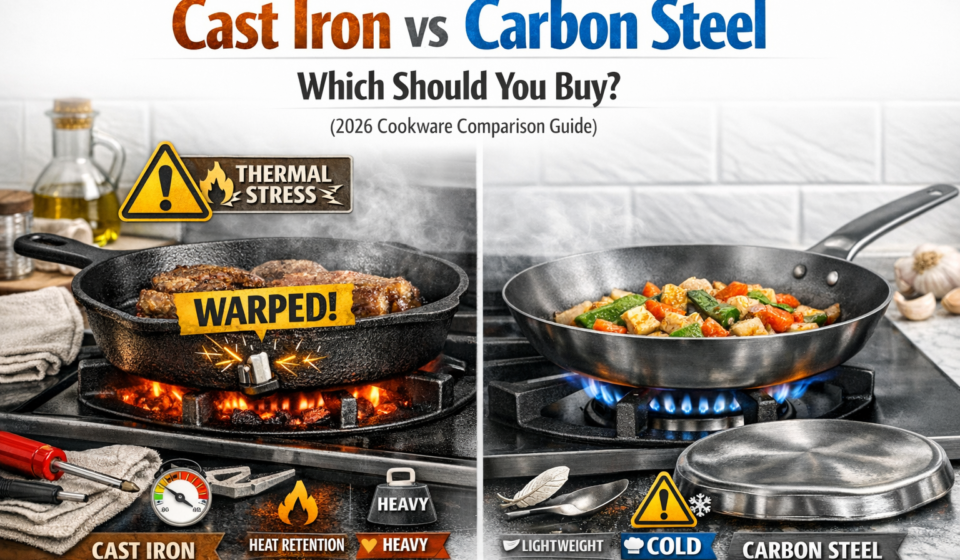
Cast iron and carbon steel are two of the most iconic, high‑performance cookware materials ever made. Both can last a lifetime, both develop a natural nonstick seasoning, and both are beloved by chefs. But they behave differently — and choosing the right one depends entirely on how you cook.
This guide breaks down how each material is made, how they perform, how they differ, and which one is best for your kitchen in 2026.
1. What Cast Iron and Carbon Steel Are Made Of
1.1 Cast Iron
Cast iron is an alloy of:
- 97–98% iron
- 2–3% carbon
The high carbon content makes cast iron:
- Brittle
- Heavy
- Extremely heat‑retentive
Cast iron is poured into molds, giving it a thick, textured surface.
1.2 Carbon Steel
Carbon steel is made of:
- 99% iron
- <1% carbon
This lower carbon content makes carbon steel:
- Stronger
- Lighter
- More flexible
- Faster to heat
Carbon steel is rolled into sheets, giving it a smooth surface.
2. Heat Performance: Retention vs Responsiveness
2.1 Cast Iron
- Heats slowly
- Holds heat extremely well
- Best for searing, frying, baking, and high‑heat cooking
- Ideal for thick cuts of meat
Strength: unmatched heat retention
Weakness: slow to respond to temperature changes
2.2 Carbon Steel
- Heats quickly
- Cools quickly
- More responsive than cast iron
- Great for sautéing, stir‑frying, and everyday cooking
Strength: fast, responsive heat control
Weakness: slightly less heat retention than cast iron
3. Weight Comparison
Cast Iron
- Very heavy
- 10–12″ skillet: 5–8 lbs
- Harder to maneuver
Carbon Steel
- Much lighter
- 10–12″ skillet: 3–5 lbs
- Easier to flip, toss, and handle
Winner: Carbon Steel
If weight matters, carbon steel is the clear choice.
4. Cooking Surface: Smooth vs Textured
Cast Iron
- Rougher surface (unless polished)
- Seasoning fills the pores over time
- Excellent nonstick when well‑seasoned
Carbon Steel
- Naturally smoother
- Seasoning bonds more evenly
- Becomes slick faster than cast iron
Winner: Carbon Steel
Faster to season and smoother from day one.
5. Seasoning: Which One Builds Better Nonstick?
Cast Iron
- Builds thick, durable seasoning
- Takes longer to become truly nonstick
- Great for frying and baking
Carbon Steel
- Seasoning develops faster
- Slicker surface earlier
- More consistent nonstick performance
Winner: Carbon Steel (faster), Cast Iron (thicker long‑term)
6. Versatility & Cooking Styles
6.1 Cast Iron Is Best For
- Searing steaks
- Deep frying
- Baking cornbread, pies, and breads
- High‑heat oven cooking
- Outdoor cooking / campfires
- Long, slow heat
6.2 Carbon Steel Is Best For
- Searing
- Stir‑frying
- Sautéing
- Omelets and eggs (once seasoned)
- Everyday stovetop cooking
- Professional kitchens
7. Durability & Lifespan
Cast Iron
- Nearly indestructible
- Can last 100+ years
- Resistant to warping
- Can crack if dropped
Carbon Steel
- Extremely durable
- More resistant to cracking
- Can warp under extreme heat (rare)
Winner: Tie
Both can last generations with proper care.
8. Maintenance & Care
Cast Iron
- Must be dried immediately
- Needs regular seasoning
- Rusts if neglected
- Not dishwasher‑safe
Carbon Steel
- Same care as cast iron
- Rusts if left wet
- Seasoning is easier to maintain
- Not dishwasher‑safe
Winner: Carbon Steel
Slightly easier to maintain and season.
9. Oven, Grill & Broiler Compatibility
Cast Iron
- Safe at any temperature
- Perfect for broilers and grills
Carbon Steel
- Safe up to 600–800°F depending on handle
- Some handles limit oven use
Winner: Cast Iron
Better for extreme heat and broiling.
10. Price Comparison
Cast Iron
- Very affordable
- $20–$60 for most skillets
- Premium brands (e.g., Smithey) cost more
Carbon Steel
- Slightly more expensive
- $40–$120 for most skillets
- Premium French pans cost more
Winner: Cast Iron
Best value for budget buyers.
11. Which Should You Buy? (2026 Verdict)
Choose Cast Iron if you want:
- Maximum heat retention
- The best sear
- Oven and grill versatility
- A pan that lasts forever
- Budget‑friendly cookware
Choose Carbon Steel if you want:
- A lighter pan
- Faster heating
- Better responsiveness
- A smoother cooking surface
- A professional‑style skillet
Best for everyday cooking:
Carbon Steel
Best for high‑heat searing and baking:
Cast Iron
Best overall for most home cooks:
Carbon Steel — lighter, smoother, faster, and more versatile.
Conclusion
Cast iron and carbon steel are both exceptional cookware materials, but they excel in different ways. Cast iron offers unmatched heat retention and durability, while carbon steel provides speed, responsiveness, and a smoother surface that becomes nonstick faster. For most home cooks, carbon steel is the more versatile choice — but cast iron remains unbeatable for high‑heat searing, baking, and long‑lasting value.