
Introduction: The Real Cost Behind Your Stove Choice
Choosing between a gas and electric stove isn’t just about cooking style — it’s about long‑term cost, energy efficiency, and how your kitchen fits into modern sustainability trends. With rising utility rates and growing interest in energy‑efficient appliances, homeowners are asking a practical question: Which stove actually costs less to run — gas or electric?
This guide breaks down the numbers, compares real‑world usage, and explains how cooking habits, local energy prices, and appliance efficiency all affect your monthly bills.
1. Understanding How Each Stove Uses Energy
Gas Stoves
- Powered by natural gas or propane
- Heat generated by an open flame
- Instant temperature control
- Energy measured in BTUs (British Thermal Units)
Electric Stoves
- Powered by electric resistance coils or induction technology
- Heat generated through electrical current
- Energy measured in kilowatt‑hours (kWh)
Each system converts energy differently — and that’s where cost differences begin.
2. Average Energy Costs in 2026 (U.S. Averages)
| Energy Type | Average Cost | Unit |
|---|---|---|
| Electricity | $0.15 per kWh | kilowatt‑hour |
| Natural Gas | $1.50 per therm | 100,000 BTUs |
These rates vary by state, but they’re good benchmarks for comparing stove costs.
3. Typical Energy Use per Cooking Session
Gas Stove
- Uses about 7,000–9,000 BTUs per hour
- Equivalent to 0.07–0.09 therms/hour
- Cost per hour:
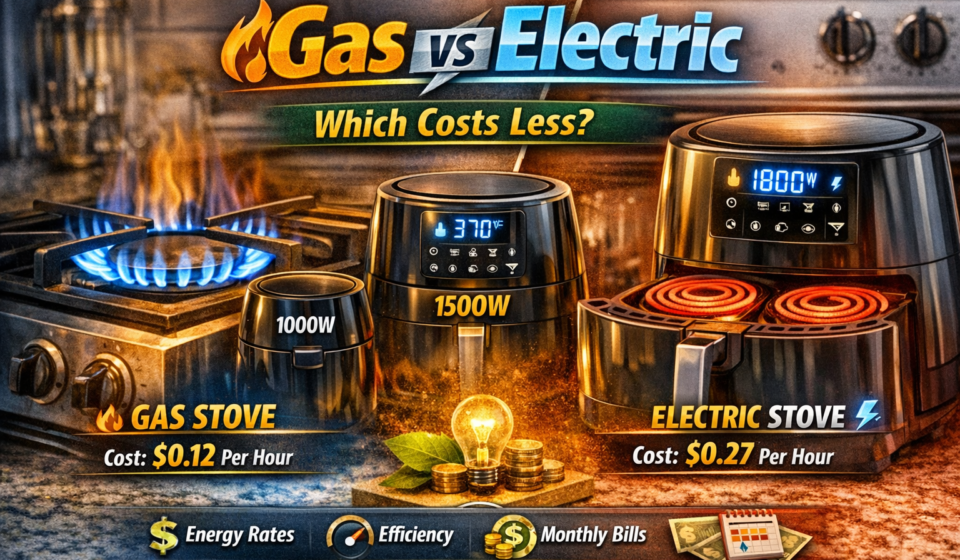
[ 0.08 \text{ therms} \times $1.50 = $0.12 ]
Electric Stove
- Uses about 1.5–2.0 kWh per hour
- Cost per hour:
[ 1.8 \text{ kWh} \times $0.15 = $0.27 ]
Result:
Gas stoves cost roughly half as much per hour to operate.
4. But Efficiency Changes the Story
Raw energy cost doesn’t tell the whole truth — efficiency matters.
| Stove Type | Energy Efficiency | Notes |
|---|---|---|
| Gas | 40–55% | Much heat lost to air |
| Electric Coil | 70–80% | Better heat transfer |
| Induction | 85–95% | Most efficient |
So while gas is cheaper per unit of energy, electric and induction stoves use that energy more efficiently.
5. Real‑World Monthly Cost Comparison
Assume you cook 1 hour per day, 30 days per month.
| Stove Type | Hourly Cost | Efficiency | Monthly Cost |
|---|---|---|---|
| Gas | $0.12 | 50% | $3.60 |
| Electric Coil | $0.27 | 75% | $8.10 |
| Induction | $0.25 | 90% | $7.50 |
Conclusion:
Gas still wins on cost, but induction narrows the gap significantly.
6. Installation and Maintenance Costs
Gas Stove
- Installation: $150–$300 (requires gas line)
- Maintenance: occasional burner cleaning
- Lifespan: 15–20 years
Electric Stove
- Installation: $100–$200 (standard outlet)
- Maintenance: minimal
- Lifespan: 13–18 years
Induction Stove
- Installation: $200–$400 (special outlet)
- Maintenance: minimal
- Lifespan: 10–15 years
Gas stoves have higher installation costs but lower operating costs. Induction stoves cost more upfront but save energy long‑term.
7. Environmental Impact
Gas Stoves
- Emit carbon dioxide and nitrogen oxides
- Contribute to indoor air pollution
- Require ventilation
Electric Stoves
- No direct emissions
- Carbon footprint depends on electricity source
- Cleaner indoor air
Induction Stoves
- Most eco‑friendly option
- Highly efficient
- Compatible with renewable energy sources
If sustainability matters, electric or induction wins.
8. Cooking Performance and Hidden Costs
Gas
- Instant heat control
- Works with all cookware
- Slightly higher kitchen heat output (affects AC costs)
Electric Coil
- Slower temperature changes
- Retains heat longer
- Slightly higher electricity bills in summer (extra cooling)
Induction
- Precise control
- Cool surface
- Requires magnetic cookware (extra cost if upgrading)
9. Regional Cost Differences
Energy prices vary dramatically by state.
| Region | Electricity Rate | Gas Rate | Winner |
|---|---|---|---|
| California | $0.28/kWh | $1.90/therm | Gas |
| Texas | $0.13/kWh | $1.40/therm | Gas |
| New York | $0.22/kWh | $1.60/therm | Gas |
| Florida | $0.15/kWh | $1.80/therm | Electric |
| Washington | $0.11/kWh | $1.60/therm | Electric |
In regions with cheap electricity (like Washington), electric stoves can actually cost less to run.
10. How to Lower Stove Energy Costs (Any Type)
1. Use the right cookware size
Match pan size to burner size — wasted heat = wasted money.
2. Keep burners clean
Carbon buildup reduces efficiency.
3. Use lids
Traps heat, shortens cooking time.
4. Preheat only when necessary
Gas stoves heat instantly; electric coils need only brief preheat.
5. Cook multiple items together
Batch cooking saves time and energy.
6. Upgrade to energy‑efficient cookware
Flat‑bottomed, conductive materials (like stainless steel or copper) improve heat transfer.
11. Long‑Term Cost Outlook (2026–2030)
Energy analysts expect:
- Natural gas prices to rise 3–5% annually
- Electricity prices to rise 2–3% annually
- Induction technology to become cheaper
By 2030, induction stoves may match gas stoves in total cost of ownership.
Conclusion: Which Stove Really Costs Less?
If you’re focused purely on monthly energy bills, gas still wins — but only slightly.
If you factor in efficiency, environmental impact, and long‑term trends, induction is the smarter investment.
For most households:
- Gas = lower short‑term cost
- Induction = lower long‑term cost + cleaner kitchen