Is Silicone Cookware Safe? (2026 Guide to Bakeware, Heat Limits & Food‑Grade Materials)

Is Silicone Cookware Safe? (2026 Guide to Bakeware, Heat Limits & Food‑Grade Materials)
The Flexible, Non‑Stick Revolution in Modern Baking
Silicone cookware has transformed home baking — colorful, flexible, and easy to clean. But many cooks still ask: Is silicone cookware safe?
This guide explores the science behind silicone, its safety profile, and how it compares to other cookware materials in 2026.
1. What Is Silicone Cookware?
Silicone cookware is made from synthetic polymers derived from silica (sand), combined with oxygen and carbon to form a flexible, heat‑resistant material.
Common Types
- Silicone bakeware — muffin pans, cake molds, loaf pans
- Silicone utensils — spatulas, whisks, brushes
- Silicone mats and liners — non‑stick surfaces for baking sheets
Silicone’s flexibility and non‑reactivity make it ideal for modern kitchens.
2. Why Silicone Cookware Is Popular
- Non‑stick and easy to clean
- Heat‑resistant up to 500°F (260°C)
- Microwave, oven, and freezer safe
- Colorful and lightweight
- Non‑reactive and odor‑free
Silicone cookware simplifies baking and food prep while reducing waste from disposable liners.
3. Is Silicone Cookware Safe?
Short Answer:
Yes — food‑grade silicone cookware is safe when certified and used correctly.
Long Answer:
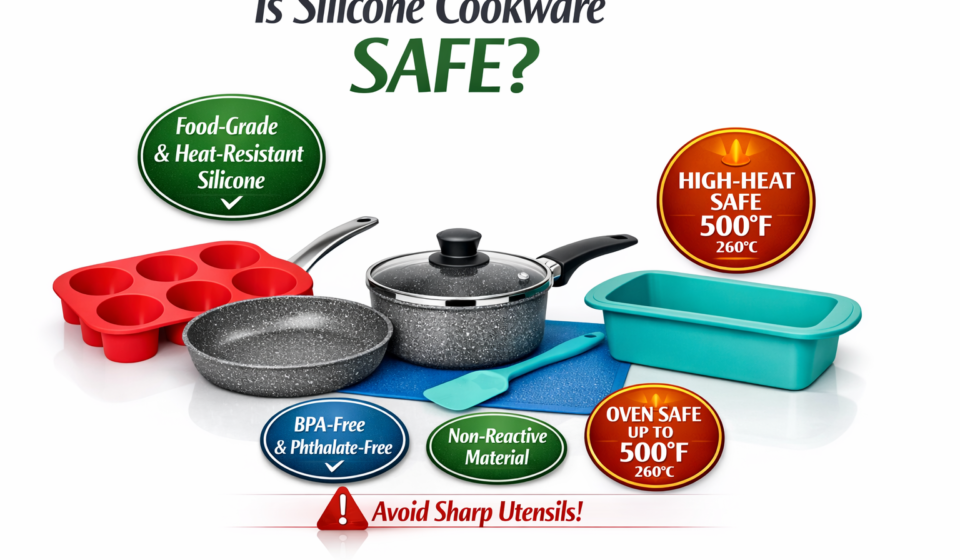
High‑quality silicone is non‑reactive, BPA‑free, and free from phthalates.
It doesn’t leach chemicals into food under normal cooking conditions.
Safety Highlights
- BPA‑free
- Phthalate‑free
- Non‑reactive
- Oven‑safe up to 500°F
- Dishwasher‑safe
4. Silicone vs Plastic Safety
| Feature | Silicone | Plastic |
|---|---|---|
| Heat Resistance | Up to 500°F | Up to 250°F |
| Chemical Stability | Excellent | Moderate |
| Reactivity | None | Possible |
| Safety | Excellent | Moderate |
| Eco‑Friendliness | High | Low |
Silicone is far safer and more durable than plastic for cooking and baking.
5. Silicone vs Metal Bakeware
| Feature | Silicone | Metal |
|---|---|---|
| Heat Conductivity | Moderate | High |
| Flexibility | Excellent | None |
| Non‑stick | Excellent | Moderate |
| Durability | Moderate | Excellent |
| Safety | Excellent | Excellent |
Silicone offers convenience and safety, while metal provides crisp browning.
6. Energy Efficiency of Silicone Cookware
Silicone’s moderate heat conductivity means it’s energy‑efficient for baking — it heats evenly and retains warmth without overcooking.
| Material | Heat Conductivity | Heat Retention | Energy Efficiency |
|---|---|---|---|
| Silicone | Moderate | Moderate | ⭐⭐⭐⭐ |
| Metal | High | Moderate | ⭐⭐⭐ |
| Glass | Moderate | High | ⭐⭐⭐⭐ |
| Ceramic | Moderate | High | ⭐⭐⭐⭐ |
Efficiency Tip
Use slightly longer bake times for silicone molds — they heat gently and evenly.
7. Environmental Impact
Silicone cookware is eco‑friendly and reusable, reducing waste from parchment paper and disposable liners.
Sustainability Highlights
- Long lifespan (10–20 years)
- Recyclable through specialized programs
- Non‑toxic disposal
- PFAS‑free manufacturing
Silicone supports sustainable, low‑waste cooking.
8. How to Use Silicone Cookware Safely
✅ Use within temperature limits (below 500°F)
✅ Avoid sharp utensils
✅ Don’t place directly on heating elements
✅ Wash before first use
✅ Check for “food‑grade” or “LFGB‑certified” labeling
Proper care ensures safe, long‑term performance.
9. Cleaning and Maintenance
Routine Cleaning
- Warm water + mild soap
- Soft sponge or cloth
- Dishwasher‑safe
Deep Cleaning
For oily residue:
- Soak in baking soda + vinegar solution
- Rinse thoroughly
Silicone stays odor‑free and stain‑resistant with minimal effort.
10. Common Safety Myths
Myth 1: Silicone melts in the oven.
False — food‑grade silicone withstands up to 500°F.
Myth 2: Silicone leaches chemicals.
False — certified silicone is inert and non‑reactive.
Myth 3: Silicone is plastic.
False — it’s a synthetic rubber derived from silica, not petroleum.
11. Best Silicone Cookware Brands (2026)
- OXO Good Grips Silicone Bakeware – LFGB‑certified, durable
- Silpat Premium Baking Mats – reusable, PFAS‑free
- KitchenAid Silicone Utensils – heat‑resistant up to 500°F
- Tovolo Silicone Molds – colorful, BPA‑free
- Wilton Perfect Results Silicone Series – affordable, oven‑safe
These brands combine safety, performance, and design.
12. Quick Safety Checklist
✅ Food‑grade silicone
✅ BPA‑free
✅ Phthalate‑free
✅ Oven‑safe up to 500°F
✅ Dishwasher‑safe
Conclusion: Is Silicone Cookware Safe?
Yes — silicone cookware is safe, flexible, and eco‑friendly.
It offers non‑stick convenience, heat resistance, and toxin‑free performance for modern kitchens.
When certified as food‑grade, silicone is one of the safest materials for baking and cooking in 2026.
If you value ease, safety, and sustainability, silicone cookware is a smart, long‑term choice.