Is Clay Cookware Safe? (2026 Guide to Earthenware, Lead Concerns & Heat Behavior)

Is Clay Cookware Safe? (2026 Guide to Earthenware, Lead Concerns & Heat Behavior)
Rediscovering Ancient Cooking Traditions in Modern Kitchens
Clay cookware — from tagines to earthen pots — has been used for thousands of years. It’s natural, rustic, and beloved for slow cooking. But many home cooks still wonder: Is clay cookware safe?
This guide explores the science behind clay pots, their safety profile, and how they fit into modern, energy‑efficient kitchens.
1. What Is Clay Cookware?
Clay cookware is made from natural earthen materials — primarily kaolin, terracotta, or stoneware clay — shaped and fired at high temperatures.
Common Types
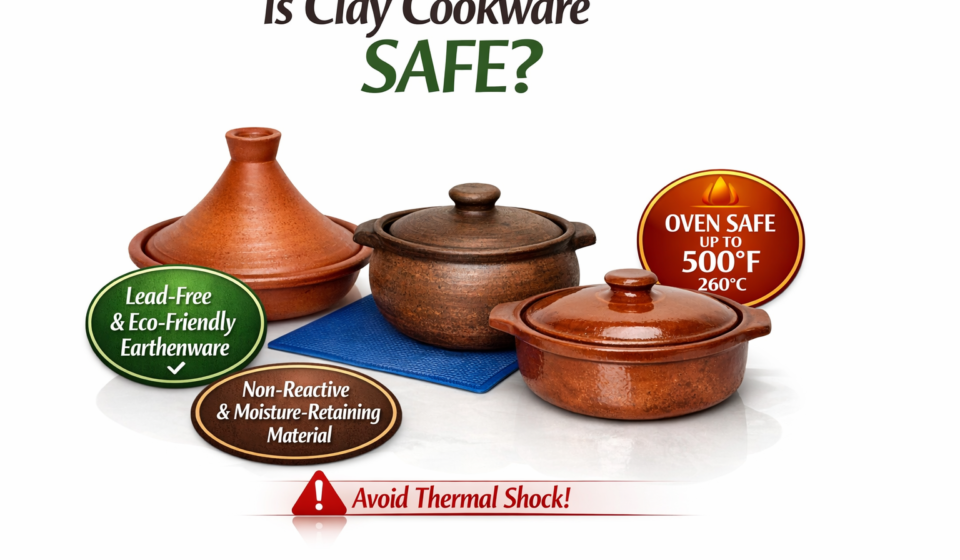
- Unglazed clay pots — porous, ideal for slow cooking.
- Glazed clay cookware — coated for durability and easy cleaning.
- Earthenware tagines and bakers — used in Mediterranean and Asian cuisines.
Clay cookware retains moisture and enhances flavor through gentle, even heat.
2. Why Clay Cookware Is Popular
- Natural and eco‑friendly
- Moisture‑retaining for tender food
- Non‑reactive surface
- Excellent heat retention
- Traditional aesthetic appeal
Clay cookware connects modern kitchens with ancient cooking wisdom.
3. Is Clay Cookware Safe?
Short Answer:
Yes — clay cookware is safe when made from lead‑free, food‑grade clay.
Long Answer:
Modern clay cookware is tested for lead, cadmium, and other heavy metals.
High‑quality brands use non‑toxic glazes or pure earthen clay certified for food use.
Safety Highlights
- Lead‑free
- Cadmium‑free
- Non‑reactive
- Oven‑safe (brand‑dependent)
- Eco‑friendly
4. Lead Concerns in Clay Cookware
Where the Risk Comes From
- Old or imported pottery may contain lead‑based glazes.
- Decorative clayware not intended for cooking can leach toxins.
- Low‑fired clay may be porous and absorb contaminants.
Modern Standards
- FDA and EU regulations require lead‑free glazes.
- Certified brands undergo heavy‑metal testing.
- Look for “Food‑Safe” or “LFGB‑Certified” labeling.
Bottom Line
Modern, certified clay cookware is safe and toxin‑free.
5. Clay vs Ceramic Safety
| Feature | Clay | Ceramic |
|---|---|---|
| Material | Natural earthen clay | Silica‑based coating |
| Porosity | High (unglazed) | Low |
| Heat Retention | Excellent | Good |
| Lead Risk | Possible (old clay) | Minimal |
| Safety | Excellent (modern) | Excellent |
Both are safe, but clay offers a more natural, moisture‑rich cooking experience.
6. Energy Efficiency of Clay Cookware
Clay cookware excels in low‑and‑slow cooking, making it energy‑efficient for stews, soups, and roasts.
| Material | Heat Conductivity | Heat Retention | Energy Efficiency |
|---|---|---|---|
| Clay (Unglazed) | Low | Excellent | ⭐⭐⭐⭐ |
| Ceramic | Moderate | High | ⭐⭐⭐⭐ |
| Cast Iron | Low | Excellent | ⭐⭐⭐⭐ |
| Aluminum | High | Moderate | ⭐⭐⭐ |
Efficiency Tip
Use low to medium heat — clay retains heat and moisture naturally.
7. Environmental Impact
Clay cookware is eco‑friendly and biodegradable.
Sustainability Highlights
- Made from natural materials
- No PFAS or synthetic coatings
- Long lifespan (10–30 years)
- Fully recyclable or compostable
- Low‑emission manufacturing
Clay cookware supports sustainable, toxin‑free cooking.
8. How to Use Clay Cookware Safely
✅ Soak unglazed pots before use
✅ Avoid sudden temperature changes
✅ Use low to medium heat
✅ Avoid metal utensils
✅ Dry thoroughly before storage
Proper care prevents cracking and extends lifespan.
9. Cleaning and Maintenance
Routine Cleaning
- Warm water + soft brush
- Avoid soap for unglazed clay (can absorb residue)
- Air‑dry completely
Deep Cleaning
For odor removal:
- Soak in baking soda + water overnight
- Rinse and dry thoroughly
Clay cookware develops a natural patina that enhances flavor.
10. Common Safety Myths
Myth 1: All clay cookware contains lead.
False — modern cookware is lead‑free and certified safe.
Myth 2: Clay pots crack easily.
False — proper soaking and gradual heating prevent cracks.
Myth 3: Clay cookware can’t handle high heat.
False — high‑fired clay withstands up to 500°F.
11. Best Clay Cookware Brands (2026)
- Miriam’s Earthen Cookware – 100% pure clay, toxin‑free
- Emile Henry – French‑made glazed clay, oven‑safe
- Römertopf – German clay bakers, moisture‑retaining design
- La Chamba – Colombian handmade earthenware
- Cazuela de Barro – traditional Spanish clay cookware
These brands combine safety, craftsmanship, and sustainability.
12. Quick Safety Checklist
✅ Lead‑free
✅ Cadmium‑free
✅ Non‑reactive
✅ Oven‑safe
✅ Eco‑friendly
Conclusion: Is Clay Cookware Safe?
Yes — clay cookware is safe, natural, and sustainable.
It offers gentle, moisture‑rich cooking and connects modern kitchens with ancient traditions.
When certified lead‑free, clay cookware is one of the healthiest and most eco‑friendly options for 2026 kitchens.
If you value flavor, tradition, and toxin‑free cooking, clay cookware is a timeless investment.