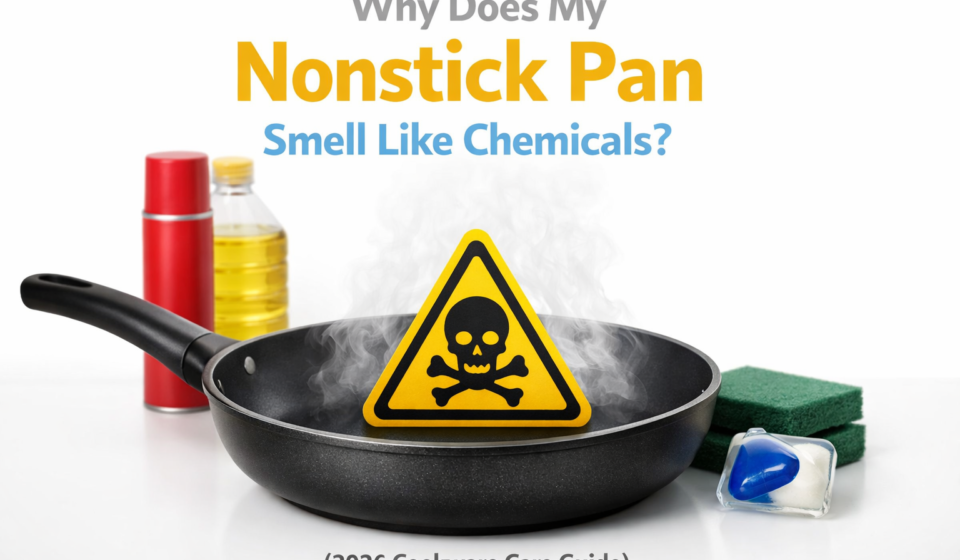

Why Does My Nonstick Pan Smell Like Chemicals? (2026 Cookware Care Guide)
A nonstick pan that suddenly smells like chemicals, plastic, or burning coating can be alarming — and for good reason. While most odors are harmless and caused by residue, overheating, or cleaning mistakes, some smells indicate damage to the nonstick surface. This guide breaks down every cause, how to fix it, and when to replace the pan for safety.
1. Overheating the Pan (The Most Common Cause)
Nonstick coatings — including PTFE, ceramic, and hybrid coatings — are designed for low to medium heat.
When overheated, they can emit:
- Chemical smells
- Plastic‑like odors
- Metallic fumes
- Burnt coating scent
Why it happens
At temperatures above 500°F, nonstick coatings begin to degrade.
At 600°F+, they can release fumes that smell sharp or chemical.
Common overheating mistakes
- Preheating an empty pan
- Using high heat for searing
- Leaving the pan on the burner after cooking
- Using power‑boost modes on induction
Fix
- Remove the pan from heat immediately
- Let it cool naturally
- Wash with warm water and mild soap
If the smell persists after cooling and washing, the coating may be damaged.
2. Residue From Cooking Sprays
Aerosol cooking sprays leave a sticky polymerized film that burns every time the pan heats up.
Smells like:
- Burnt plastic
- Chemical residue
- Old oil
Why it happens
Propellants and additives in sprays carbonize at low temperatures.
Fix
- Scrub gently with baking soda paste
- Avoid abrasive pads
- Switch to bottled oil instead of sprays
3. Burnt Food or Oil Residue
Even nonstick pans can accumulate burnt residue if:
- Oil overheats
- Sugary sauces caramelize
- Food burns onto the surface
Smells like:
- Bitter burnt smell
- Acrid chemical odor
- Smoky plastic scent
Fix
- Simmer water + a teaspoon of baking soda in the pan
- Let cool
- Wipe clean with a soft sponge
This loosens carbonized residue without damaging the coating.
4. New Pan “Factory Smell”
Brand‑new nonstick pans sometimes emit a mild chemical smell during the first few uses.
Why
Manufacturing oils and protective coatings burn off.
Fix
- Wash thoroughly before first use
- Heat on low for 2–3 minutes to burn off residue
- Apply a thin layer of oil to condition the surface
This smell usually disappears after 1–2 uses.
5. Dishwasher Damage
Most nonstick pans labeled “dishwasher safe” still degrade faster in dishwashers.
Why
Dishwasher detergents contain:
- Bleaching agents
- Harsh alkalis
- Abrasive particles
These can break down the coating and create a chemical smell when heated.
Fix
- Hand‑wash only
- If dishwasher damage has occurred, the smell may be permanent
6. Using the Wrong Cleaning Tools
Abrasive scrubbers can scratch the coating, exposing the metal underneath.
Smells like:
- Metallic odor
- Chemical‑burn smell when heated
Fix
- Switch to soft sponges
- Avoid steel wool or scouring pads
- If scratches are deep, replace the pan
7. Coating Breakdown (Time to Replace)
If the pan:
- Smells chemical every time it heats
- Has visible scratches
- Shows peeling or flaking
- Has a sticky surface even after cleaning
…the nonstick coating is degrading.
Fix
Replace the pan.
Nonstick coatings have a lifespan of 2–5 years depending on use.
How to Prevent Chemical Smells in Nonstick Pans
✔ Use low to medium heat
Nonstick coatings are not designed for high‑heat cooking.
✔ Never preheat empty
Always add oil or food before heating.
✔ Avoid cooking sprays
They leave polymerized residue.
✔ Hand‑wash only
Dishwashers shorten the lifespan dramatically.
✔ Use silicone or wooden utensils
Metal utensils scratch the coating.
✔ Store carefully
Stacking pans without protection can damage the surface.
Best Oils for Nonstick Pans (Safe for Low–Medium Heat)
| Oil | Smoke Point | Best Use | Notes |
|---|---|---|---|
| Avocado Oil | 520°F | Everyday cooking | Neutral, stable |
| Grapeseed Oil | 420°F | Sautéing | Clean flavor |
| Canola Oil | 400°F | General use | Affordable |
| Butter | 300°F | Low‑heat cooking | Burns easily |
| Olive Oil | 350°F | Light sautéing | Avoid high heat |
When to Replace Your Nonstick Pan
Replace the pan if you notice:
- Persistent chemical smell
- Peeling or flaking coating
- Deep scratches
- Sticky surface that won’t clean
- Uneven heating or discoloration
A damaged nonstick pan is not worth salvaging — and modern replacements are inexpensive.
Final Thoughts
A nonstick pan that smells like chemicals is usually reacting to heat, residue, or cleaning mistakes — not failing catastrophically. With proper care, nonstick cookware can stay odor‑free and high‑performing for years. But if the coating is damaged or the smell persists, replacing the pan is the safest option.