Why Is My Nonstick Pan Peeling? (2026 Ultimate Guide to Causes, Safety, Prevention & Replacement)

Why Is My Nonstick Pan Peeling? (2026 Ultimate Guide to Causes, Safety, Prevention & Replacement)
A complete breakdown of coating failure, heat damage, utensil wear, and how to extend the life of your cookware
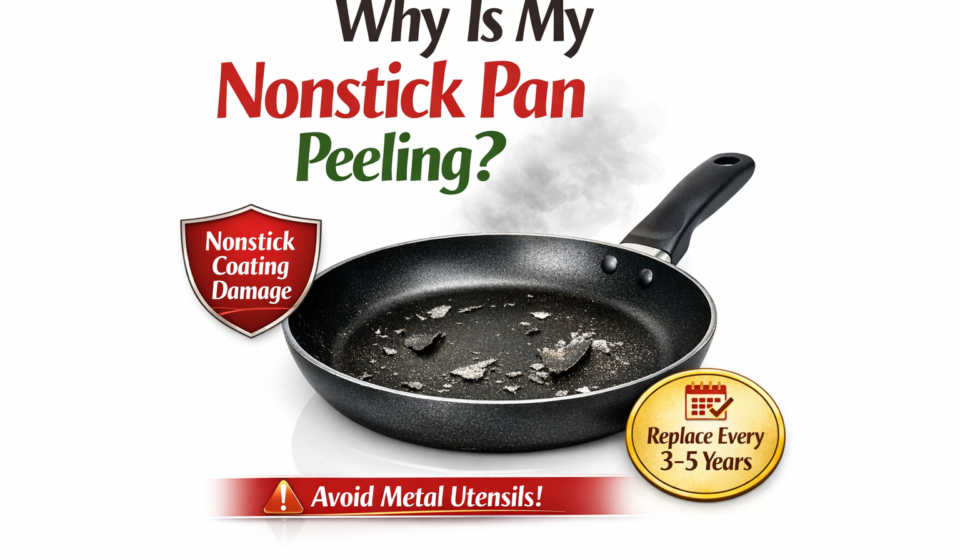
Nonstick pans are kitchen essentials, but when the coating begins to peel, flake, bubble, or scratch, it raises two urgent questions: Why is this happening — and is it still safe to use?
This long‑form guide explains the science behind nonstick coatings, the real causes of peeling, how to prevent damage, and when it’s time to replace your pan.
1. How Nonstick Coatings Actually Work
Understanding why nonstick pans peel starts with understanding how they’re built.
1.1 PTFE (Teflon) Coatings
PTFE is a fluoropolymer with extremely low surface energy — meaning food slides off easily.
A PTFE pan typically has:
- Aluminum base
- Bonding primer layer
- Multiple PTFE layers (2–5 coats)
- Optional topcoat for scratch resistance
1.2 Ceramic Nonstick Coatings
Ceramic coatings are made from silica‑based sol‑gel technology. They’re PFAS‑free but:
- Less flexible
- More prone to micro‑cracking
- Sensitive to thermal shock
1.3 Diamond, Titanium, or Granite‑Infused Coatings
These are still PTFE or ceramic — the “infusion” simply adds durability or texture.
1.4 Why This Matters
Each coating type fails differently:
| Coating Type | Weakness | Typical Lifespan |
|---|---|---|
| PTFE | Overheating, metal utensils | 3–5 years |
| Ceramic | Thermal shock, abrasion | 1–3 years |
| Hard‑Anodized Nonstick | Very durable | 5–7 years |
| Hybrid Steel‑Nonstick | High durability | 5–10 years |
2. The Real Reasons Nonstick Pans Peel
Peeling is almost always caused by heat, abrasion, or chemical erosion. Here’s the full breakdown.
2.1 Overheating (The #1 Cause)
PTFE begins to degrade at 500°F (260°C).
Ceramic coatings weaken at 700°F (371°C).
Common overheating scenarios:
- Preheating an empty pan
- Using high heat for searing
- Leaving a pan on the burner unattended
- Using a gas flame that extends beyond the pan’s base
Overheating causes:
- Micro‑cracks
- Blistering
- Bubbling
- Flaking
Once the bond between the coating and metal breaks, peeling accelerates rapidly.
2.2 Metal Utensils & Abrasion
Metal spatulas, forks, whisks, and tongs scrape the coating.
Even one deep scratch can:
- Expose the aluminum base
- Create a weak point
- Lead to progressive peeling
Abrasive cleaning tools (steel wool, scouring pads) cause similar damage.
2.3 Dishwasher Damage
Dishwasher detergents contain:
- Enzymes
- Bleaching agents
- High‑alkaline compounds
These degrade the bonding layer and cause the coating to lift.
2.4 Thermal Shock
Running a hot pan under cold water causes the metal base to contract faster than the coating.
This leads to:
- Warping
- Micro‑fractures
- Delamination
Ceramic coatings are especially vulnerable.
2.5 Oil Carbonization
Aerosol sprays (Pam, etc.) leave sticky residues that:
- Burn onto the surface
- Create rough patches
- Cause food to stick
- Accelerate coating wear
2.6 Age & Natural Wear
Even with perfect care, nonstick coatings wear down over time.
The average lifespan:
- PTFE: 3–5 years
- Ceramic: 1–3 years
- Hard‑Anodized: 5–7 years
If your pan is older than this, peeling is normal.
3. Is a Peeling Nonstick Pan Dangerous?
Short answer: It’s not immediately toxic, but it’s not safe to keep using.
3.1 PTFE Safety
Modern PTFE is PFOA‑free and considered safe when intact.
However:
- Flaking PTFE can release microplastics
- Overheated PTFE can emit fumes harmful to birds
- Exposed aluminum can react with acidic foods
3.2 Ceramic Safety
Ceramic flakes are inert but:
- They can scratch teeth
- They indicate the coating is failing
- The pan will cook unevenly
3.3 Bottom Line
If the coating is peeling, retire the pan from daily cooking.
4. How to Prevent Peeling (Pro‑Level Care Guide)
These steps dramatically extend the life of your nonstick cookware.
4.1 Use the Right Utensils
Only use:
- Silicone
- Wood
- Nylon
Avoid:
- Metal
- Hard plastic
- Knives
- Pizza cutters
4.2 Cook at the Right Temperature
Use low to medium heat for:
- Eggs
- Pancakes
- Stir‑fries
- Sautéing
Avoid high heat unless the pan is specifically rated for it.
4.3 Proper Cleaning
Do:
- Hand‑wash with warm water
- Use soft sponges
- Use mild dish soap
Avoid:
- Steel wool
- Abrasive powders
- Dishwasher cycles
4.4 Proper Storage
Stacking pans causes friction damage.
Use:
- Pan protectors
- Paper towels
- Hanging racks
4.5 Avoid Aerosol Sprays
Use:
- Olive oil
- Avocado oil
- Butter
- Ghee
Aerosol sprays carbonize and ruin coatings.
5. When to Replace Your Nonstick Pan
Replace immediately if you see:
- Peeling or flaking
- Bubbles or blisters
- Deep scratches
- Exposed metal
- Uneven cooking
- Persistent sticking
A damaged nonstick pan cannot be repaired — only replaced.
6. Best Replacement Options (2026 Recommendations)
PTFE Nonstick (Most Durable)
- Hard‑anodized aluminum
- Multi‑layer PTFE
- Oven‑safe to 500°F
Ceramic Nonstick (PFAS‑Free)
- Silica‑based
- Eco‑friendly
- Best for low‑heat cooking
Hybrid Stainless‑Steel Nonstick
- Laser‑etched steel grid
- PTFE in recessed pockets
- Extremely long lifespan
Cast Iron / Carbon Steel (Natural Nonstick)
- No coatings
- Lasts decades
- Requires seasoning
7. How to Dispose of a Peeling Pan
Do not throw it in household recycling.
Instead:
- Take it to a scrap metal facility
- Remove the handle if possible
- Check for brand recycling programs
8. Frequently Asked Questions
Can I still use a scratched nonstick pan?
Light scratches are fine; peeling is not.
Can I reseason a nonstick pan like cast iron?
No — seasoning does not bond to PTFE or ceramic.
Why does food stick even if the pan isn’t peeling?
The coating may be worn smooth or contaminated with carbonized oil.
Do expensive nonstick pans last longer?
Yes — premium pans use thicker coatings and stronger bonding layers.
Conclusion
A peeling nonstick pan is a sign of coating failure caused by heat, abrasion, or age. While not immediately dangerous, it should be replaced to ensure safe, efficient cooking. With proper care — moderate heat, gentle cleaning, and the right utensils — your next nonstick pan can last years longer.