Is Enamel Cookware Safe? (2026 Guide to Coatings, Chipping & Heat Retention)

Is Enamel Cookware Safe? (2026 Guide to Coatings, Chipping & Heat Retention)
Understanding Enamel‑Coated Cast Iron, Steel & Ceramic in Modern Kitchens
Enamel cookware has exploded in popularity thanks to brands like Le Creuset, Staub, and Lodge. It’s colorful, durable, and ideal for slow cooking — but many home cooks still wonder: Is enamel cookware safe?
This guide breaks down the science behind enamel coatings, how they’re made, and whether they pose any health risks in 2026.
1. What Is Enamel Cookware?
Enamel cookware is typically made from:
- Cast iron coated with enamel
- Steel coated with enamel
- Ceramic coated with enamel glaze
The enamel itself is a glass‑based coating fused to the metal at extremely high temperatures.
Why Enamel Exists
- Prevents rust
- Creates a non‑reactive surface
- Adds color and durability
- Eliminates the need for seasoning
Enamel cookware combines the heat retention of cast iron with the convenience of a non‑reactive surface.
2. Why Enamel Cookware Is Popular
- Non‑reactive — safe for acidic foods
- No seasoning required
- Oven‑safe and stovetop‑safe
- Beautiful colors and finishes
- Excellent heat retention
- Long lifespan
Enamel cookware is one of the most versatile and user‑friendly materials in modern kitchens.
3. Is Enamel Cookware Safe?
Short Answer:
Yes — enamel cookware is safe when made by reputable manufacturers.
Long Answer:
Enamel is a glass‑based coating made from silica, clay, and natural minerals.
It contains no PFAS, PTFE, PFOA, or heavy metals when produced under modern safety standards.
Safety Highlights
- Non‑reactive
- No metal leaching
- No seasoning required
- Safe for acidic foods
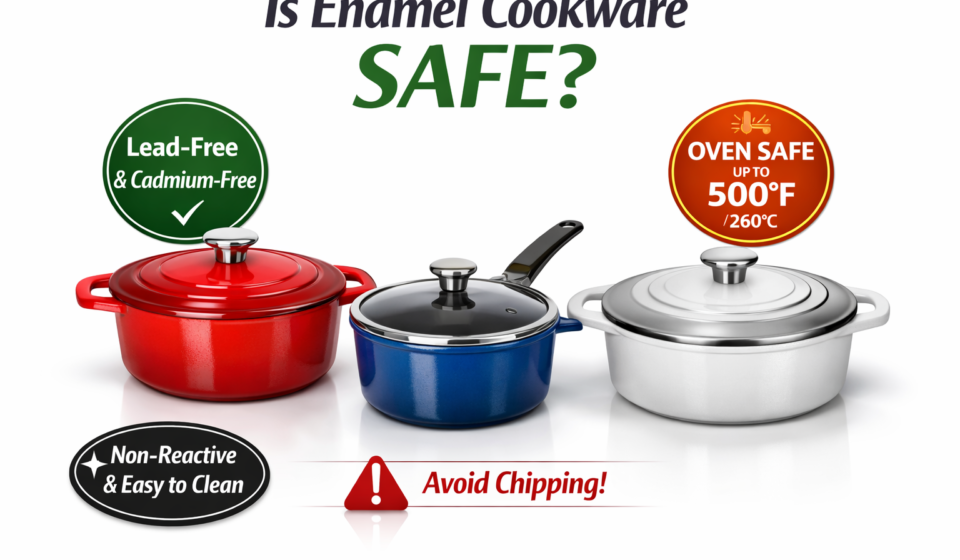
- Oven‑safe up to 500°F (brand‑dependent)
Enamel cookware is considered one of the safest materials for everyday cooking.
4. Does Enamel Contain Lead or Cadmium?
This is the most common concern — and the answer depends on the manufacturer.
Modern, reputable brands
- Use lead‑free and cadmium‑free glazes
- Meet strict FDA and EU safety standards
- Are tested for heavy metals before sale
Risk factors
- Vintage enamel cookware (pre‑1970s)
- Cheap, unregulated imports
- Decorative enamelware not intended for cooking
Bottom Line
High‑quality enamel cookware from trusted brands is lead‑free, cadmium‑free, and safe.
5. Enamel Chipping: Is It Dangerous?
Enamel can chip if dropped or hit with metal utensils.
Is chipped enamel toxic?
No — the enamel itself is inert and non‑toxic.
Is the exposed metal safe?
Yes — most enamel cookware uses cast iron or steel, both safe materials.
When to replace
- Large chips inside the cooking surface
- Sharp edges that could flake further
- Rust forming on exposed metal
Small chips on the exterior are cosmetic and safe.
6. Enamel vs Cast Iron Safety
| Feature | Enamel Cast Iron | Bare Cast Iron |
|---|---|---|
| Reactivity | None | Reactive with acids |
| Seasoning | Not required | Required |
| Heat Retention | Excellent | Excellent |
| Maintenance | Easy | Moderate |
| Safety | Excellent | Excellent |
Enamel eliminates cast iron’s reactivity while keeping its heat performance.
7. Enamel vs Ceramic Safety
| Feature | Enamel | Ceramic |
|---|---|---|
| Material | Glass coating | Silica‑based coating |
| Durability | High | Moderate |
| Heat Tolerance | Excellent | Good |
| Chipping Risk | Moderate | Moderate |
| Safety | Excellent | Excellent |
Both are safe, but enamel is more durable under high heat.
8. Energy Efficiency of Enamel Cookware
Enamel cookware — especially enamel cast iron — is one of the most energy‑efficient materials.
| Material | Heat Conductivity | Heat Retention | Energy Efficiency |
|---|---|---|---|
| Enamel Cast Iron | Low | Excellent | ⭐⭐⭐⭐⭐ |
| Stainless Steel | Moderate | Moderate | ⭐⭐⭐ |
| Aluminum | Excellent | Moderate | ⭐⭐⭐⭐ |
| Ceramic | Moderate | High | ⭐⭐⭐⭐ |
Efficiency Tip
Use low to medium heat — enamel cast iron retains heat so well that high heat is rarely needed.
9. Environmental Impact
Enamel cookware is eco‑friendly and built to last decades.
Sustainability Highlights
- No PFAS or chemical coatings
- Long lifespan (20–50 years)
- Recyclable metal core
- Low‑emission manufacturing
- Non‑toxic disposal
Enamel cookware supports sustainable, low‑waste kitchens.
10. How to Use Enamel Cookware Safely
✅ Use low to medium heat
✅ Avoid metal utensils
✅ Don’t preheat empty
✅ Avoid thermal shock
✅ Lift, don’t slide, to prevent scratching
✅ Hand‑wash when possible
Proper care prevents chipping and extends lifespan.
11. Cleaning and Maintenance
Routine Cleaning
- Warm water + mild soap
- Soft sponge or nylon brush
- Avoid steel wool
Deep Cleaning
For stubborn stains:
- Simmer water + baking soda
- Or soak with vinegar + water
Enamel stays bright and odor‑free with minimal effort.
12. Best Enamel Cookware Brands (2026)
- Le Creuset – premium enamel cast iron, lifetime durability
- Staub – matte enamel interior, excellent heat retention
- Lodge Enamel Cast Iron – affordable, durable
- Cuisinart Chef’s Classic Enamel – budget‑friendly
- Xtrema Enamel Steel – lightweight, toxin‑free
These brands meet modern safety and durability standards.
13. Quick Safety Checklist
✅ Lead‑free
✅ Cadmium‑free
✅ Non‑reactive
✅ Oven‑safe
❗ Replace if interior chips
❗ Avoid metal utensils
Conclusion: Is Enamel Cookware Safe?
Yes — enamel cookware is safe, durable, and non‑reactive.
It offers the heat retention of cast iron with the convenience of a smooth, easy‑to‑clean surface.
When purchased from reputable brands, enamel cookware is one of the safest and most reliable materials for 2026 kitchens.
If you value beauty, durability, and toxin‑free cooking, enamel cookware is a smart, long‑term investment.