Is Cast Iron Cookware Safe? (2026 Guide to Health, Maintenance, and Energy Efficiency)

Is Cast Iron Cookware Safe? (2026 Guide to Health, Maintenance, and Energy Efficiency)
Separating Tradition from Modern Science
Cast iron cookware has been trusted for centuries — from rustic skillets to heirloom Dutch ovens. It’s durable, versatile, and beloved for its ability to hold heat. But as health and safety standards evolve, many wonder: Is cast iron cookware still safe?
This guide explores the science behind cast iron, how it interacts with food, and what you need to know to cook safely and efficiently.
1. What Is Cast Iron Cookware?
Cast iron is made by pouring molten iron into molds, creating thick, heavy cookware that retains heat exceptionally well.
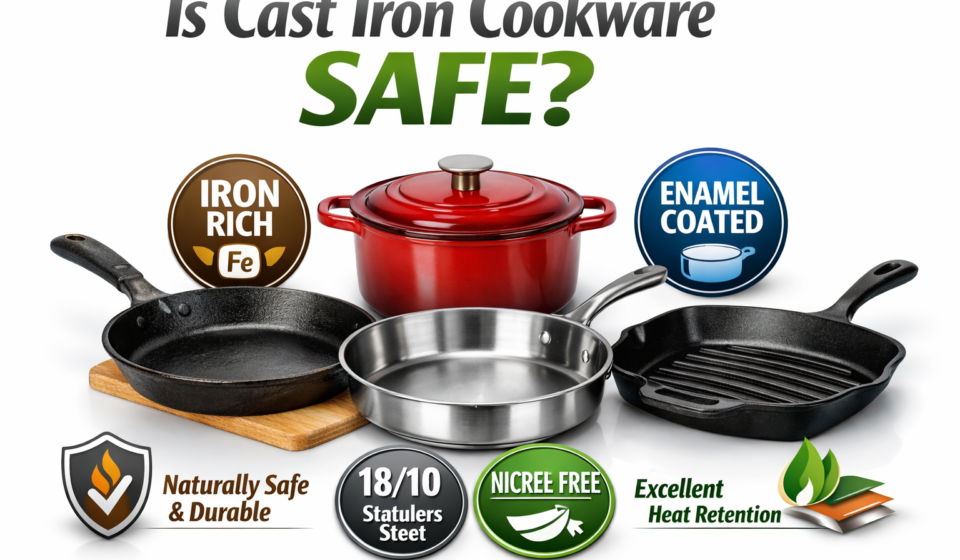
Types of Cast Iron
- Bare Cast Iron — traditional, requires seasoning
- Enameled Cast Iron — coated with porcelain enamel, non‑reactive and easy to clean
Both are safe when used correctly, but they behave differently in terms of maintenance and cooking style.
2. Why Cast Iron Is So Popular
- Unmatched heat retention — ideal for searing and slow cooking
- Naturally nonstick when seasoned
- Extremely durable — lasts decades or generations
- Adds trace iron to food — beneficial for most people
- Compatible with all cooktops, including induction
It’s the cookware that bridges old‑world craftsmanship with modern performance.
3. Is Cast Iron Cookware Safe?
Short Answer:
Yes — cast iron cookware is safe for everyday use.
Long Answer:
Bare cast iron can leach small amounts of iron into food, especially with acidic ingredients. For most people, that’s beneficial.
However, those with hemochromatosis (a condition causing excess iron absorption) should limit use.
Enameled Cast Iron
Completely non‑reactive — no iron leaching, no rust, no seasoning required.
Safe for all foods, including acidic dishes.
4. Iron Leaching: How Much Is Too Much?
Studies show that cooking in bare cast iron can increase iron content in food by up to 20 mg per serving, depending on acidity and cooking time.
| Food Type | Cookware Type | Iron Added | Health Impact |
|---|---|---|---|
| Tomato sauce | Bare cast iron | 10–20 mg | Beneficial for most adults |
| Boiled water | Bare cast iron | < 1 mg | Negligible |
| Tomato sauce | Enameled cast iron | 0 mg | None |
The FDA considers this safe and even beneficial for those with mild iron deficiency.
5. Rust and Safety
Rust is iron oxide, not toxic in small amounts, but it can affect taste and texture.
If your pan rusts, simply scrub, rinse, dry, and re‑season — no need to discard it.
Prevention Tips
- Keep cookware dry
- Apply a thin oil layer after cleaning
- Store in a low‑humidity area
6. Seasoning and Nonstick Safety
Seasoning creates a natural nonstick layer by polymerizing oil onto the surface.
It’s 100% natural, unlike synthetic coatings.
Safe Oils for Seasoning
- Flaxseed oil
- Grapeseed oil
- Canola oil
- Vegetable shortening
Avoid overheating — seasoning burns off above 500°F.
7. Energy Efficiency of Cast Iron
Cast iron heats slowly but retains heat longer than any other cookware material.
| Material | Heat Conductivity | Heat Retention | Energy Efficiency |
|---|---|---|---|
| Copper | Excellent | Low | ⭐⭐⭐⭐ |
| Aluminum | Excellent | Moderate | ⭐⭐⭐⭐ |
| Stainless Steel | Moderate | Moderate | ⭐⭐⭐ |
| Cast Iron | Low | Excellent | ⭐⭐⭐⭐ |
Efficiency Tip
Once heated, cast iron maintains temperature with minimal energy — perfect for slow cooking and oven use.
8. Cast Iron vs Other Materials
| Feature | Cast Iron | Stainless Steel | Aluminum | Ceramic |
|---|---|---|---|---|
| Safety | Excellent | Excellent | Excellent (anodized) | Excellent |
| Durability | Outstanding | Outstanding | Moderate | Moderate |
| Heat Retention | Excellent | Moderate | Low | Moderate |
| Maintenance | Requires seasoning | Easy | Easy | Moderate |
| Energy Efficiency | High | Medium | High | Medium |
Cast iron wins for longevity and heat retention, while stainless steel wins for ease of care.
9. Enameled vs Bare Cast Iron
| Feature | Bare Cast Iron | Enameled Cast Iron |
|---|---|---|
| Reactivity | Reactive with acids | Non‑reactive |
| Maintenance | Requires seasoning | No seasoning |
| Durability | Excellent | Excellent |
| Cleaning | Hand‑wash only | Dishwasher‑safe |
| Safety | Excellent | Excellent |
Enameled cast iron is ideal for those who prefer low maintenance and zero seasoning.
10. Environmental Impact
Cast iron is eco‑friendly and fully recyclable.
It lasts for decades, reducing waste and manufacturing emissions.
Sustainability Highlights
- 100% recyclable
- No synthetic coatings
- Long lifespan
- Compatible with induction (energy‑efficient cooking)
11. How to Use Cast Iron Safely
✅ Preheat gradually
✅ Avoid cooking acidic foods for long periods in bare pans
✅ Re‑season regularly
✅ Don’t soak in water
✅ Dry thoroughly after washing
Proper care ensures safety and performance for generations.
12. Best Cast Iron Cookware Brands (2026)
- Lodge – affordable, American‑made, pre‑seasoned
- Le Creuset – premium enameled cast iron, colorful designs
- Staub – professional‑grade enameled cookware
- Victoria – lightweight, ergonomic cast iron
- Finex – modern design, polished finish, stainless steel handles
These brands combine safety, durability, and energy efficiency.
13. Quick Safety Checklist
✅ Season regularly
✅ Avoid prolonged acidic cooking
✅ Keep dry to prevent rust
✅ Use medium heat
✅ Replace if cracked or enamel chips
Conclusion: Is Cast Iron Cookware Safe?
Yes — cast iron cookware is safe, durable, and energy‑efficient.
Bare cast iron adds beneficial iron to food, while enameled versions eliminate reactivity entirely.
If you value longevity, sustainability, and timeless performance, cast iron remains one of the safest and most rewarding cookware choices for 2026 kitchens.