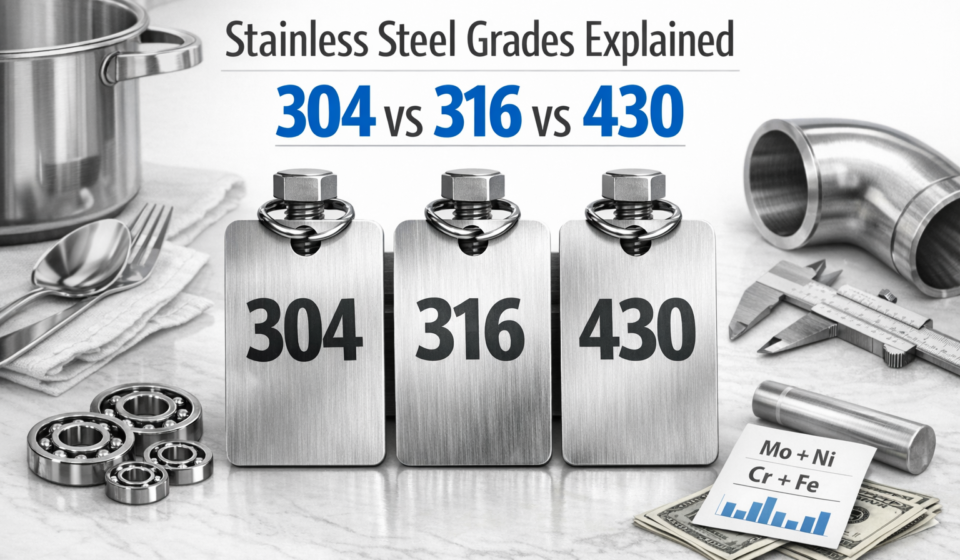

Stainless Steel Grades Explained (304 vs 316 vs 430)
A complete 2026 guide to stainless steel composition, corrosion resistance, cookware performance, and which grade is best for your kitchen
Stainless steel is one of the most durable and reliable cookware materials ever created — but not all stainless steel is the same. The numbers you see stamped on the bottom of pans (304, 316, 430, 18/10, 18/8, etc.) represent different grades of steel with different levels of corrosion resistance, nickel content, magnetic properties, and cooking performance.
This guide breaks down exactly what each grade means, how they perform in real‑world cooking, and which one you should choose for your kitchen in 2026.
1. What Stainless Steel Is Made Of
Stainless steel is an alloy — a mixture of metals — designed to resist rust, corrosion, and staining.
Core elements in stainless steel
- Iron (base metal)
- Chromium (prevents rust)
- Nickel (improves corrosion resistance and shine)
- Carbon (adds strength)
- Molybdenum (added in premium grades for salt resistance)
The exact percentages of these elements determine the grade.
2. Understanding Stainless Steel Grade Numbers
The most common cookware grades are:
- 304 stainless steel (also called 18/8 or 18/10)
- 316 stainless steel (premium, marine‑grade)
- 430 stainless steel (magnetic, used in induction bases)
Each grade has different strengths and weaknesses.
3. 304 Stainless Steel (18/8 or 18/10)
The most common stainless steel used in cookware
304 stainless steel is the industry standard for high‑quality cookware.
Composition
- 18% chromium
- 8–10% nickel
- Small amounts of carbon and manganese
Benefits
- Excellent corrosion resistance
- Non‑reactive with food
- Shiny, polished appearance
- Durable and long‑lasting
- Resists pitting and staining
Drawbacks
- Not magnetic (unless cold‑worked)
- Not as resistant to salt corrosion as 316
Best for
- Everyday stainless steel cookware
- Sauté pans
- Stock pots
- Mixing bowls
- Bakeware
Why it’s popular
304 stainless steel offers the best balance of price, durability, and performance.
4. 316 Stainless Steel (Marine‑Grade Stainless Steel)
The premium, corrosion‑resistant upgrade
316 stainless steel is used in high‑end cookware and professional kitchens.
Composition
- 16–18% chromium
- 10–14% nickel
- 2–3% molybdenum (the key difference)
Benefits
- Exceptional corrosion resistance
- Highly resistant to salt, acids, and chlorides
- More durable than 304
- Less prone to pitting
Drawbacks
- More expensive
- Not magnetic
- Overkill for many home cooks
Best for
- Coastal environments
- High‑salt cooking (brines, seafood boils)
- Professional kitchens
- Premium cookware brands
Why it matters
The addition of molybdenum makes 316 stainless steel significantly more resistant to corrosion — especially from salt.
5. 430 Stainless Steel (Magnetic Stainless Steel)
The stainless steel used for induction‑compatible cookware bases
430 stainless steel is less corrosion‑resistant but magnetic, making it essential for induction cookware.
Composition
- 16–18% chromium
- 0% nickel
- Higher carbon content
Benefits
- Magnetic (works with induction cooktops)
- Affordable
- Good heat conduction when layered
Drawbacks
- Lower corrosion resistance
- Can discolor more easily
- Not as durable as 304 or 316
Best for
- Induction‑ready cookware bases
- Budget stainless steel cookware
- Layered (clad) cookware cores
Why it’s used
430 stainless steel is rarely used as a cooking surface — it’s used as the outer layer of tri‑ply or 5‑ply cookware to make it induction‑compatible.
6. 18/10 vs 18/8: What Do These Numbers Mean?
These numbers refer to the chromium and nickel content.
- 18/10 = 18% chromium, 10% nickel
- 18/8 = 18% chromium, 8% nickel
Which is better?
- 18/10 is slightly more corrosion‑resistant
- 18/8 is slightly more affordable
- Both are forms of 304 stainless steel
In real‑world cooking, the difference is minimal.
7. Which Stainless Steel Grade Is Best for Cookware?
Best overall:
304 stainless steel (18/10 or 18/8)
Balanced, durable, non‑reactive, and widely available.
Best for premium cookware:
316 stainless steel
Superior corrosion resistance, especially for salty or acidic cooking.
Best for induction compatibility:
430 stainless steel
Used as the magnetic base layer in multi‑ply cookware.
8. How Stainless Steel Cookware Is Built (Tri‑Ply, 5‑Ply, etc.)
Most stainless steel cookware is clad, meaning multiple layers of metal are bonded together.
Typical tri‑ply construction
- 304 stainless steel cooking surface
- Aluminum core for heat conduction
- 430 stainless steel exterior for induction
5‑ply and 7‑ply
Add more layers of aluminum or stainless steel for:
- Better heat retention
- More even heating
- Increased durability
9. How to Choose the Right Stainless Steel Grade for Your Kitchen
Choose 304 if you want:
- Everyday durability
- Non‑reactive cooking
- Long‑lasting shine
- Good value
Choose 316 if you want:
- Premium performance
- Maximum corrosion resistance
- The best possible cookware
Choose 430 if you want:
- Induction compatibility
- Budget‑friendly options
10. Care Tips to Extend the Life of Stainless Steel Cookware
10.1 Avoid high heat when empty
Prevents discoloration and warping.
10.2 Use the right cleaning methods
Bar Keepers Friend removes stains and rainbow discoloration.
10.3 Avoid salt on cold water
Salt can cause pitting — add it after the water boils.
10.4 Don’t shock hot pans with cold water
Prevents warping.
10.5 Use non‑abrasive tools
Protects the polished surface.
Conclusion
Stainless steel grades matter — and understanding them helps you choose cookware that lasts decades. For most home cooks, 304 stainless steel offers the best balance of performance and value. For premium durability and salt resistance, 316 stainless steel is the gold standard. And for induction compatibility, 430 stainless steel is essential as the magnetic base layer.
Together, these grades form the backbone of modern tri‑ply and multi‑ply cookware, giving you the durability, heat control, and non‑reactive performance stainless steel is known for.