
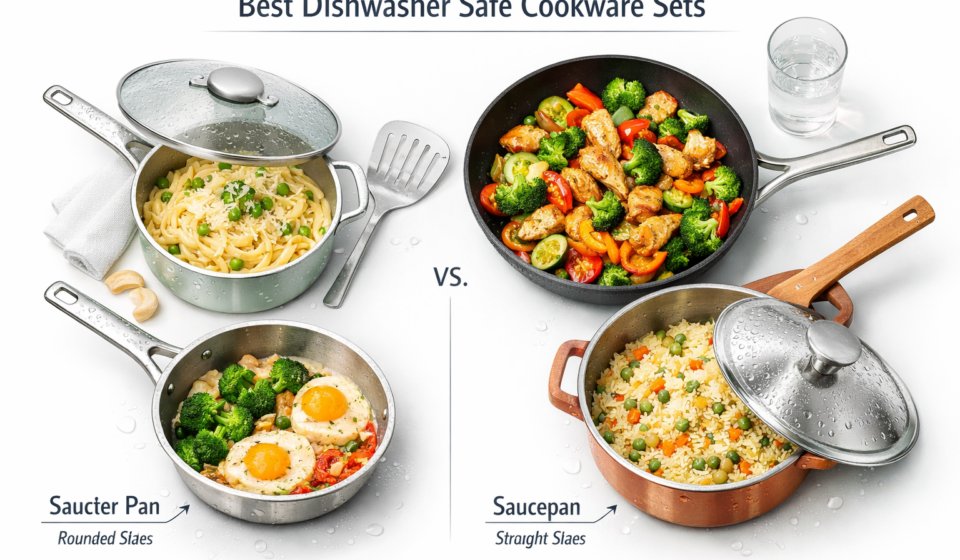

Best Dishwasher Safe Cookware Sets (2026 Expert Guide)
Dishwasher safe cookware has become one of the most practical upgrades for modern kitchens.
For busy families, working professionals, seniors, and anyone who wants easier cleanup, dishwasher-safe cookware removes one of the most frustrating parts of cooking: hand scrubbing stubborn food residue after every meal.
But not all cookware marketed as “dishwasher safe” performs equally.
Some sets technically survive dishwasher cycles while quickly losing finish quality, warping, staining, or degrading their nonstick performance over time.
The best dishwasher safe cookware should deliver:
- Reliable long-term durability
- Easy cleanup without coating breakdown
- Even heating performance
- Comfortable daily usability
- Strong overall value for the price
This expert guide explains exactly what to look for, what to avoid, and which dishwasher-safe cookware sets are worth buying in 2026.
Why Dishwasher Safe Cookware Matters
Modern households value convenience.
Handwashing cookware after every meal adds time, effort, and frustration.
Dishwasher-safe cookware offers practical benefits including:
- Faster cleanup
- Reduced kitchen fatigue
- Less scrubbing strain for seniors
- Better daily consistency for busy schedules
- Simplified meal prep routines
For many buyers, cleanup convenience directly affects how often they cook at home.
What “Dishwasher Safe” Actually Means
This is often misunderstood.
Dishwasher safe does not always mean dishwasher ideal.
Some cookware survives dishwasher cycles but performs better with occasional handwashing.
The best truly dishwasher-safe cookware is engineered with:
- Durable coating systems
- Corrosion resistance
- Rivet protection
- Stable base construction
- Heat-resistant finishes
Always check manufacturer guidance carefully.
What to Look for in Dishwasher Safe Cookware
1. Durable Surface Protection
Dishwasher detergents can be harsh.
Look for cookware with surfaces designed to resist:
- Chemical degradation
- Surface fading
- Nonstick breakdown
- Mineral staining
2. Strong Handle Construction
Repeated heat and detergent exposure can weaken low-quality handle connections.
Secure riveted handles last longer.
3. Warp Resistance
Dishwasher heat cycles can expose weak cookware construction quickly.
Heavy-gauge aluminum or reinforced bases resist warping best.
4. Easy Everyday Usability
Dishwasher safety should complement good cooking performance—not replace it.
5. Brand Reliability
Established cookware brands generally maintain better manufacturing consistency.
Best Dishwasher Safe Cookware Materials
Ceramic-Coated Aluminum
Pros:
- Lightweight
- Easy cleanup
- Healthy non-toxic appeal
Cons:
- Some ceramic coatings still benefit from handwashing
Best when high-quality.
Hard-Anodized Aluminum
Pros:
- Strong durability
- Good dishwasher resistance
- Excellent heat consistency
Excellent all-around practical choice.
Stainless Steel
Pros:
- Extremely dishwasher durable
- Long lifespan
- Excellent structural stability
Cons:
- Harder food cleanup
- Heavier handling
Best for durability-focused buyers.
Top 7 Best Dishwasher Safe Cookware Sets (2026)
1. GreenPan Chatham Ceramic Set (Best Overall)
GreenPan Chatham offers one of the strongest balances of convenience, healthy cooking, and dishwasher-safe practicality.
Why It Wins
- PFAS-free ceramic surface
- Dishwasher-safe design
- Lightweight construction
- Excellent food release
- Comfortable handling
Best For
Families and seniors wanting easy maintenance.
Pros
- Excellent cleanup convenience
- Lightweight usability
- Strong everyday performance
Cons
- Ceramic lifespan still benefits from occasional handwashing
2. Calphalon Classic Hard-Anodized (Best Durability)
Excellent practical reliability.
Strengths:
- Strong dishwasher resistance
- Durable build quality
- Reliable heating consistency
Ideal for heavy-use kitchens.
3. Cuisinart Chef’s Classic Stainless Steel
Best dishwasher-safe stainless steel option.
Pros:
- Extremely durable
- Professional-style performance
- Excellent long-term value
Cons:
- Heavier
- Requires cooking technique
4. GreenLife Ceramic Set (Best Budget Option)
Affordable and lightweight.
Best for:
- Apartments
- Beginners
- Budget-conscious households
5. T-fal Ultimate Hard-Anodized
Strong mainstream choice.
Reliable value and broad availability.
6. Circulon Premier Professional
Known for durable nonstick engineering and dishwasher resilience.
Excellent practical performer.
7. Ninja Foodi NeverStick Premium
Excellent premium nonstick dishwasher-safe option.
Strong durability and high consumer satisfaction.
Comparison Table
| Brand | Material | Weight | Cleanup Ease | Durability |
|---|---|---|---|---|
| GreenPan Chatham | Ceramic | Light | Excellent | Medium-High |
| Calphalon Classic | Hard-Anodized | Medium | Very Good | High |
| Cuisinart Chef’s Classic | Stainless | Medium-Heavy | Good | Very High |
| GreenLife | Ceramic | Light | Excellent | Medium |
| T-fal Ultimate | Hard-Anodized | Medium | Very Good | Medium-High |
| Circulon Premier | Nonstick | Medium | Very Good | High |
| Ninja NeverStick | Premium Nonstick | Medium | Excellent | High |
Dishwasher Safe vs Hand Wash Only Cookware
Dishwasher-safe cookware wins for convenience.
Hand-wash-only cookware often wins for maximum lifespan.
If convenience strongly affects your cooking habits, dishwasher-safe cookware is usually the better choice.
Common Buyer Mistakes
Assuming All Nonstick Is Dishwasher Friendly
Some nonstick coatings degrade faster under dishwasher heat and detergent exposure.
Buying Based on Marketing Alone
Look at construction quality—not just labels.
Ignoring Long-Term Durability
Cheap dishwasher-safe cookware often becomes expensive through replacement cycles.
How to Make Dishwasher Safe Cookware Last Longer
Even dishwasher-safe cookware benefits from smart care:
- Use low-heat drying cycles
- Avoid harsh abrasive detergents
- Separate pans to reduce scratching
- Remove promptly after washing
- Occasionally handwash premium ceramic pieces
These habits extend lifespan significantly.
Frequently Asked Questions
Does dishwasher-safe mean maintenance-free?
No. Proper care still matters.
Is ceramic dishwasher safe?
Some high-quality sets are, but occasional handwashing helps longevity.
What material lasts longest in dishwashers?
Stainless steel typically lasts longest.
Is dishwasher-safe cookware worth it?
For convenience-focused households, absolutely.
Final Verdict
For most households, GreenPan Chatham is the best dishwasher safe cookware set in 2026.
It offers the strongest balance of:
- Cleanup convenience
- Healthy ceramic cooking
- Lightweight comfort
- Excellent usability
- Strong everyday value
For maximum durability, Calphalon Classic and Cuisinart Chef’s Classic are stronger long-term options.
The best dishwasher-safe cookware should save time without sacrificing cooking performance.
Choose based on how often convenience affects your real kitchen habits.
Related Guides
- Best Cookware for Seniors
- Best Lightweight Cookware for Elderly
- Best Cookware Under $200
- Ceramic vs Stainless Steel Cookware
- Best Non-Toxic Cookware Set USA