
Made In Cookware Review (2026)
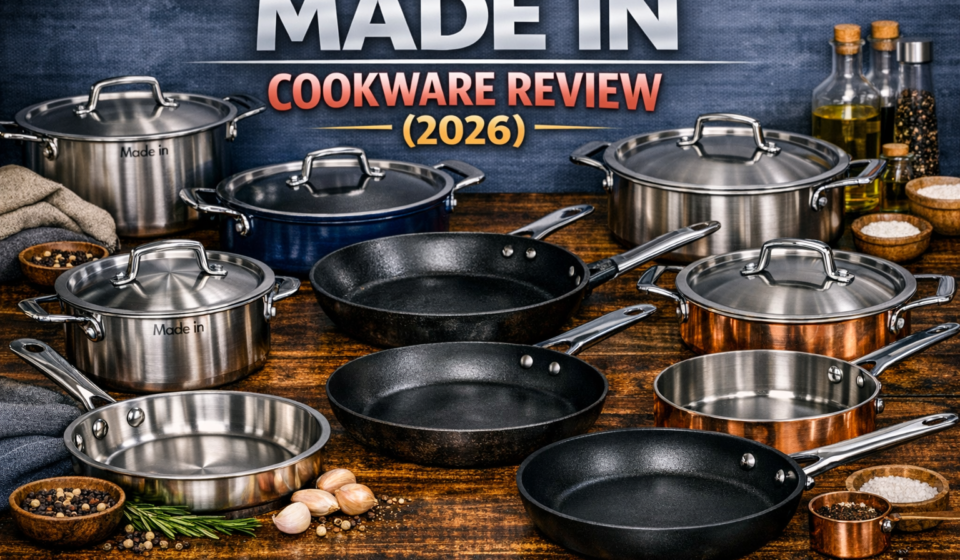
Made In has become one of the most disruptive cookware brands of the last decade. What started as a direct‑to‑consumer stainless steel line has evolved into a full professional‑grade cookware ecosystem used in Michelin‑star restaurants, test kitchens, and serious home kitchens. In this comprehensive 2026 review, we break down every Made In cookware line, compare it to All‑Clad and other competitors, and help you decide whether Made In is the right investment for your cooking style.
For related guides, explore:
All‑Clad Cookware Review (2026),
Best Stainless Steel Frying Pans (2026 Guide),
and
Best Hybrid Cookware (HexClad & Alternatives).
Why Made In Has Become a Top Cookware Brand
Made In’s rise is no accident. They entered the market with a simple promise: professional‑grade cookware without retail markup. By selling directly to consumers, they offer 5‑ply stainless steel, carbon steel, and copper cookware at prices significantly lower than legacy brands. Their partnerships with chefs like Tom Colicchio and Grant Achatz have boosted credibility, but the performance is what keeps cooks loyal.
What Makes Made In Different?
- 5‑ply stainless steel construction that rivals All‑Clad D3 and D5.
- Premium carbon steel pans that behave like cast iron but are lighter and more responsive.
- 90% copper cookware for elite-level precision.
- Restaurant partnerships that validate real‑world performance.
- Transparent pricing with no retail markup.
Is Made In Worth It in 2026?
For most cooks, yes — Made In offers some of the best performance‑to‑price ratios in the premium cookware market. Their stainless steel line is exceptional, their carbon steel pans are industry favorites, and their copper line competes with brands that cost 2–3× more. The only caveat is that their non‑stick pans, like all non‑stick, have a limited lifespan.
Pros and Cons at a Glance
- Pros: Professional performance, induction compatibility, modern design, excellent heat control, strong value, chef‑backed credibility.
- Cons: Limited retail availability, fewer size options than All‑Clad, non‑stick lifespan is finite, copper line is expensive.
Made In Cookware Lines Compared
Made In offers four major cookware lines, each designed for different cooking styles and skill levels. Below is a detailed comparison.
Comparison Table: Made In Cookware Lines (2026)
| Line | Material | Induction Compatible | Oven Safe | Best For |
|---|---|---|---|---|
| Stainless Steel | 5‑ply SS/Aluminum | Yes | Up to 800°F | Everyday cooking, searing, sauces |
| Non‑Stick | 5‑ply base + PTFE | Yes | Up to 500°F | Eggs, pancakes, delicate foods |
| Carbon Steel | Carbon Steel | Yes | Up to 1200°F | High‑heat searing, grilling, roasting |
| Copper | 90% Copper + SS lining | Yes | Up to 800°F | Sauces, reductions, precision cooking |
Made In Stainless Steel Review
Made In’s stainless steel line is the backbone of their brand. The 5‑ply construction offers excellent heat distribution and retention, making it ideal for searing, sautéing, simmering, and pan sauces. The brushed finish hides scratches better than polished stainless, and the ergonomic handles provide a secure grip.
Performance Testing
- Searing: Excellent browning with even heat distribution.
- Simmering: Stable low‑heat control for sauces and reductions.
- Boiling: Faster boil times than tri‑ply competitors.
- Oven Use: Safe up to 800°F — higher than All‑Clad D3.
Made In Non‑Stick Review
Made In’s non‑stick pans use a PTFE coating over a 5‑ply stainless base, giving them better heat distribution than typical aluminum non‑stick pans. They’re induction compatible and oven‑safe to 500°F. While the coating will eventually wear out, Made In’s non‑stick is more durable than most mid‑range brands.
Best Uses
- Eggs and omelets
- Pancakes and crepes
- Delicate fish
- Quick weeknight meals
Made In Carbon Steel Review
Made In’s carbon steel pans are beloved by chefs for their versatility. They behave like cast iron but are lighter and more responsive. Once seasoned, they develop a natural non‑stick surface that improves over time.
Why Carbon Steel Is a Game Changer
- High heat tolerance: Up to 1200°F — perfect for searing.
- Oven and grill safe: Ideal for steaks, vegetables, and roasting.
- Natural non‑stick: Improves with seasoning.
- Durability: Essentially indestructible.
Made In Copper Review
Made In’s copper cookware is 90% copper with a stainless steel lining, offering elite‑level responsiveness. It heats and cools faster than any other cookware material, making it ideal for sauces, reductions, and precision cooking.
Who Should Buy Copper?
- Professional chefs
- Serious enthusiasts
- Home cooks who value precision
How Made In Compares to All‑Clad
Made In’s stainless steel line rivals All‑Clad D3 in performance and exceeds it in oven safety. Made In is more affordable due to its direct‑to‑consumer model, while All‑Clad offers more product variety and a longer legacy. For most home cooks, Made In offers better value; for collectors and professionals, All‑Clad still holds prestige.
Buying Guide: Which Made In Line Should You Choose?
- Best for Most Cooks: Stainless Steel
- Best for High‑Heat Cooking: Carbon Steel
- Best for Delicate Foods: Non‑Stick
- Best for Precision: Copper
Care Tips for Made In Cookware
- Stainless Steel: Preheat before adding oil; use Bar Keepers Friend for shine.
- Non‑Stick: Hand wash; avoid high heat; use soft utensils.
- Carbon Steel: Season regularly; avoid soap; dry immediately.
- Copper: Polish exterior; avoid overheating when empty.
Final Verdict: Is Made In Worth It?
Made In is one of the best cookware brands of 2026. Their stainless steel and carbon steel lines are exceptional, their non‑stick is premium, and their copper line rivals luxury brands at a lower price. Whether you’re upgrading from entry‑level cookware or building a professional‑grade kitchen, Made In is a smart long‑term investment.
Explore more cookware reviews in our Stainless Steel, Non‑Stick, and Buying Guides categories.