Vintage Pyrex & CorningWare: The Cookware That Appreciates in Value
Open your grandmother’s kitchen cabinets, and you will likely see them: colorful, nesting glass bowls with patterns of flowers, snowflakes, or solid primary colors.
This is Vintage Pyrex. And right now, it is one of the hottest commodities on eBay.
While modern glass cookware is often made of soda-lime glass (which can shatter if the temperature changes too fast), vintage Pyrex (made before 1998) was made of Borosilicate. This legendary glass is incredibly resistant to thermal shock, meaning you can take it from the fridge to the oven without worry.
But beyond the science, people buy it for the style. Here is how to start your collection without overpaying.
1. Know Your Patterns: What is Hot?
Not all old bowls are valuable. The value is entirely in the pattern and color.
Primary Colors (1940s): The classic set of four nesting bowls in yellow, green, red, and blue. These are the “starter pack” for any collector.
Pink Gooseberry: A white bowl with pink flowers/berries. Extremely popular and highly photogenic for Instagram.
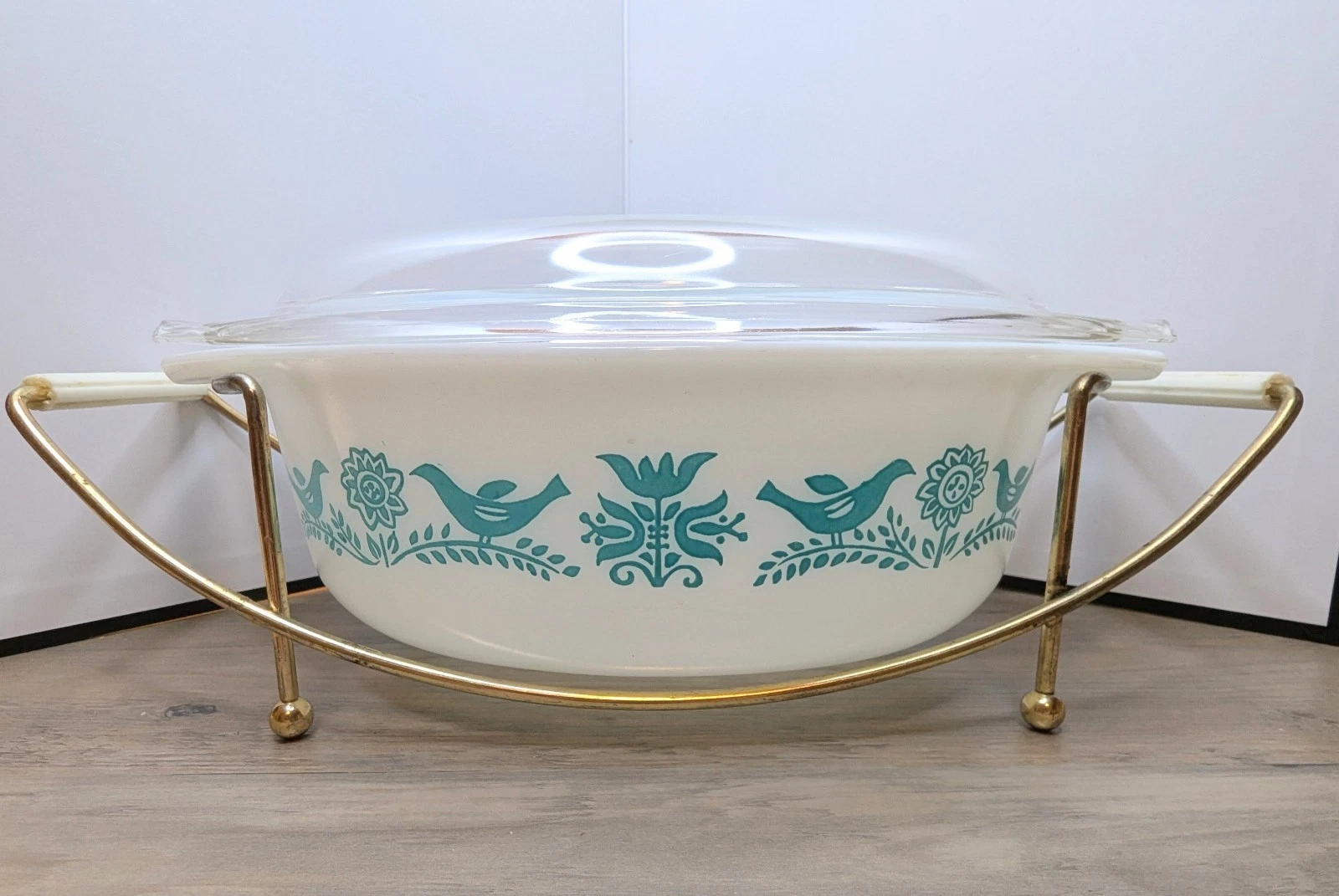
Butterprint (Amish): Turquoise diagrams of farmers and roosters. A mid-century modern staple.
Friendship: Bright red and orange birds. Very 1970s and fetching high prices right now.
2. The “DWD” Warning: How to Check Condition
The biggest enemy of vintage Pyrex is the dishwasher. Enthusiasts call it “DWD” (Dishwasher Damage).
When browsing eBay listings, look closely at the finish of the paint.
Mint Condition: The paint is shiny, glossy, and smooth.
DWD (Damaged): The paint looks chalky, faded, or feels rough to the touch (like a chalkboard).
Deal Hunter Tip: If you just want these bowls for mixing pancake batter and don’t care about display, you can pick up “DWD” sets for dirt cheap. They still cook perfectly; they just aren’t shiny.
3. CorningWare: The “Blue Cornflower” Treasure
While hunting for Pyrex, keep an eye out for CorningWare—specifically the white casserole dishes with the little blue flowers on the side (the “Blue Cornflower” pattern).
There is a myth that all of these are worth thousands. That is false. However, rare versions (look for “P-range” marks on the bottom) can sell for hundreds. They are arguably the best casserole dishes ever made.
4. Is it Safe? (The Lead Question)
A common question regarding vintage cookware involves safety. Vintage patterns (painted on the outside) may contain lead in the paint, as was common in the mid-20th century.
The Rule: If the bowl is painted on the outside, it is generally considered safe for mixing ingredients inside. However, many collectors prefer to use them as serving dishes or display pieces rather than for microwave cooking, just to preserve the paint.
Conclusion: A Kitchen with Personality
A stack of vintage Pyrex bowls adds instant warmth and history to a modern kitchen. They are conversation starters that actually work.
Related Reading: If you love the idea of cookware that lasts forever, you need to read our guide on Finding Vintage Cast Iron Skillets. Just like Pyrex, the older stuff is often better than what you can buy new today.