
Best Cookware for Coil vs. Smooth Top Stoves (2026 Comparison Guide)
Choosing the right cookware depends not just on material and design — but also on your cooktop type. Coil stoves and smooth top stoves (glass or ceramic) have different heating mechanisms, surface sensitivities, and cookware requirements. Using the wrong pan can lead to warping, scratching, or inefficient cooking.
This 2026 comparison guide breaks down the best cookware for each stove type, explains key differences, and recommends top-performing sets for both coil and smooth top surfaces.
For individual stove guides, explore:
Best Cookware for Electric Coil Stoves,
Best Cookware for Glass Top Stoves,
and
Best Cookware for Ceramic Cooktops.
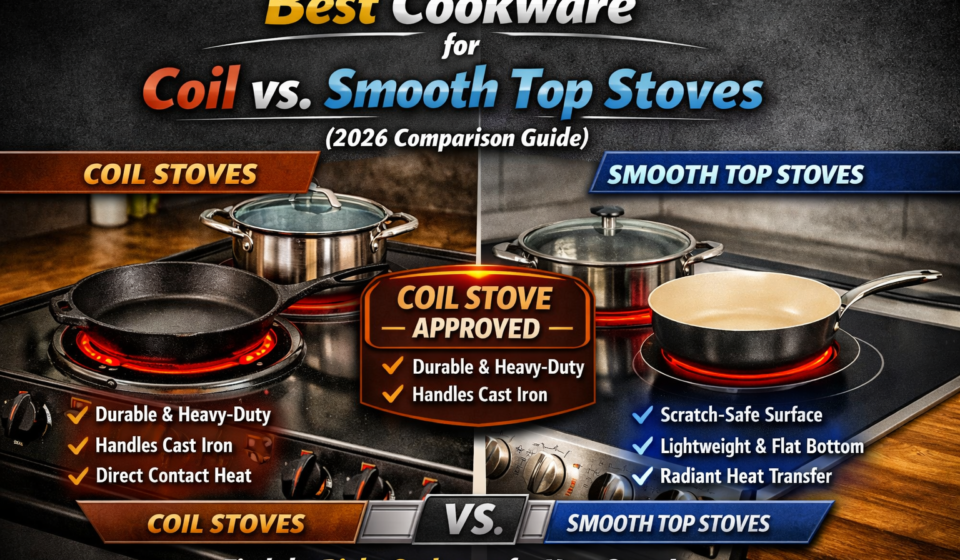
Quick Comparison: Coil vs. Smooth Top Stove Requirements
| Feature | Coil Stoves | Smooth Top Stoves |
|---|---|---|
| Surface Type | Exposed metal coils | Glass or ceramic surface |
| Heat Transfer | Direct contact with coil | Radiant heat through glass |
| Cookware Base Needs | Flat and warp-resistant | Flat and scratch-safe |
| Material Sensitivity | Handles rougher materials | Avoid cast iron unless enameled |
| Best Materials | Stainless steel, cast iron, hard-anodized | Stainless steel, ceramic-coated aluminum |
Top Cookware Picks for Coil Stoves
- All-Clad D3 Stainless Steel — Tri-ply, warp-resistant, flat base
- Lodge Cast Iron Skillet — Excellent heat retention, durable
- Calphalon Premier Hard-Anodized — Non-stick, thick base
- T-fal Ultimate Hard-Anodized — Budget-friendly, anti-warp base
Top Cookware Picks for Smooth Top Stoves
- All-Clad D3 Stainless Steel — Polished base, scratch-safe
- Caraway Ceramic Set — Lightweight, smooth base
- GreenPan Valencia Pro — Ceramic non-stick, Magneto base
- Calphalon Premier — Flat, smooth base, non-stick
Buying Guide: Matching Cookware to Your Stove Type
1. Flat Bottoms Are Essential
Both coil and smooth top stoves require cookware with flat bottoms for efficient heat transfer. Warped pans cause uneven cooking and damage.
2. Coil Stoves Can Handle Heavier Cookware
Cast iron and thick stainless steel work well on coil burners. The exposed coils support heavier pans without risk to the surface.
3. Smooth Tops Require Scratch-Safe Bases
Glass and ceramic surfaces are prone to scratches. Avoid dragging pans and choose cookware with polished or coated bases.
4. Avoid Thin Aluminum on Coil Burners
Thin pans warp easily over coil heat. Choose hard-anodized or multi-ply construction.
5. Consider Weight and Stability
Heavy cookware can crack smooth tops if dropped. Lightweight ceramic-coated aluminum is ideal for glass cooktops.
FAQs
Can I use the same cookware on coil and smooth top stoves?
Yes — if the cookware has a flat, smooth base and is warp-resistant. Stainless steel and hard-anodized aluminum work well on both.
Is cast iron safe for smooth top stoves?
Only if enameled or used carefully. Raw cast iron can scratch glass surfaces.
What cookware should I avoid on coil stoves?
Avoid thin aluminum or lightweight pans that warp easily.
What cookware should I avoid on smooth tops?
Avoid rough-bottomed pans, stoneware, and raw cast iron unless enameled.
Do ceramic pans work on both stove types?
Yes — ceramic-coated aluminum pans are lightweight and safe for both coil and smooth tops.
Final Thoughts
Matching cookware to your stove type ensures better performance, safety, and longevity. Coil stoves thrive with durable, warp-resistant cookware like stainless steel and cast iron. Smooth top stoves require scratch-safe, flat-bottomed pans like ceramic-coated aluminum and polished stainless steel.
Whether you’re cooking on coils or glass, choosing the right cookware helps protect your stove and elevate your cooking experience.
Explore more cookware guides:
Best Cookware for Electric Coil Stoves,
Best Cookware for Glass Top Stoves,
Best Cookware for Ceramic Cooktops,
Best Stainless Steel Cookware Sets,
and
Best Non-Stick Pans.